10 Best Boom Cylinder Types for Your Construction Needs?
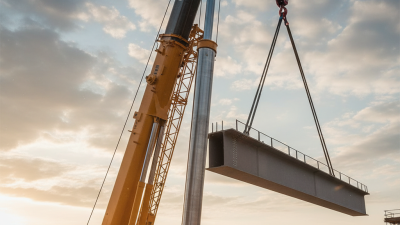
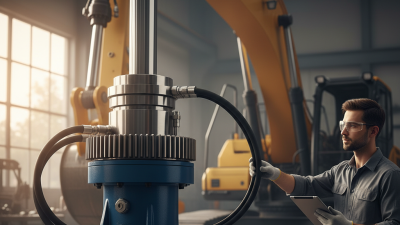
In the construction industry, selecting the right equipment can make a significant difference. One key component is the Boom Cylinder, which plays a critical role in lifting and maneuvering heavy loads. Understanding the various types of Boom Cylinders can help ensure your projects operate smoothly and efficiently.
Each Boom Cylinder type comes with unique features tailored to specific construction needs. Factors such as load capacity, durability, and application suitability matter. It's not just about choosing the most robust option; the right Boom Cylinder should match your specific task requirements.
Construction professionals often overlook the importance of compatibility. Using an unsuitable Boom Cylinder can lead to inefficiencies or, worse, accidents. Take time to evaluate your options. Seek expert opinions and witness what works best in practice. Balancing technical specifications with real-world application can lead to more effective decision-making.
Overview of Boom Cylinder Types and Their Applications
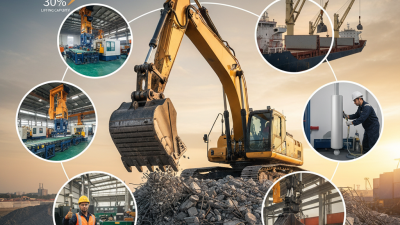
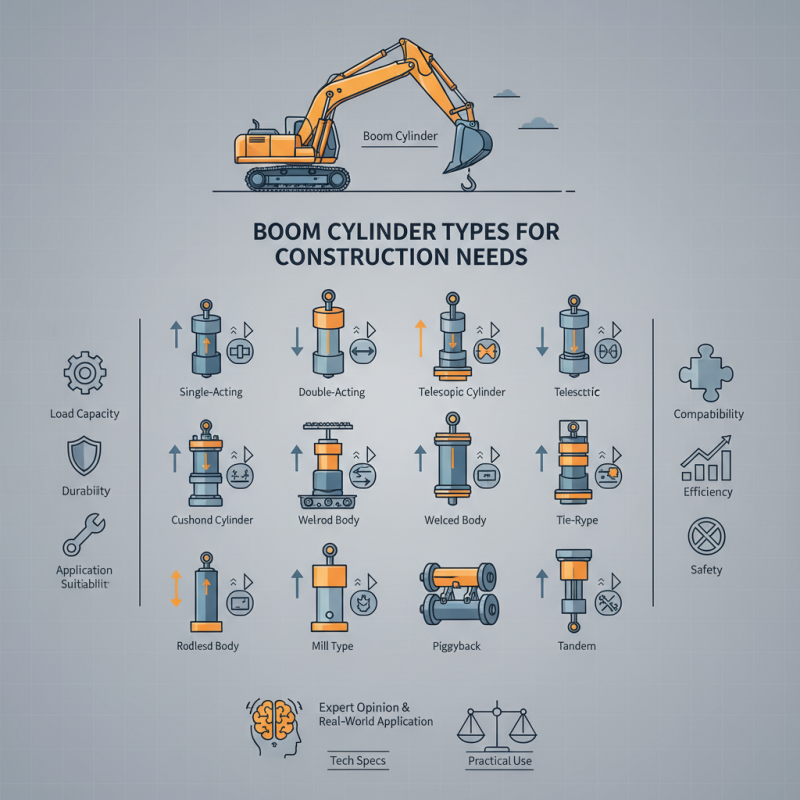
Boom cylinders play a crucial role in construction machinery. They are responsible for lifting and extending equipment like excavators and cranes. Understanding different boom cylinder types helps in selecting the right one for your needs. Each type has unique features that influence performance and efficiency.
There are various boom cylinder designs available. Single-acting cylinders are popular for simpler tasks. They use hydraulic pressure to extend the boom, relying on gravity to retract. Double-acting cylinders offer more control, allowing movement in both directions. This makes them suitable for heavy lifting and precise operations. Understanding the operating conditions is vital when choosing a type.
In practical applications, the environment affects the choice of boom cylinder. For example, in tight spaces, compact cylinders can be beneficial. They provide power without needing excessive space for operation. It’s essential to assess the load capacity and the working environment. This ensures safety and operational efficiency. Consideration of these factors can lead to better equipment performance.
10 Best Boom Cylinder Types for Your Construction Needs
Key Factors to Consider When Choosing Boom Cylinders
When selecting boom cylinders, consider key factors that impact performance and reliability. One crucial aspect is the force output. Ensure the cylinder can handle the expected loads in your construction projects. Look for pressure ratings that align with your tasks.
Another essential factor is size and compatibility. The cylinder must fit well within the equipment while providing adequate reach. Measure the dimensions carefully to avoid operational failures. Remember, a poorly fitted cylinder can lead to mechanical issues and safety hazards.
**Tip:** Regularly inspect cylinders for wear and tear. Small cracks can escalate into significant problems.
Also, evaluate the materials used in the cylinder’s construction. High-strength materials enhance durability. Think about the working environment; harsher conditions require robust options.
**Tip:** Keep a maintenance schedule. This prevents sudden breakdowns and costly repairs.
By balancing these factors, you can find the right boom cylinder type for your needs. Make thoughtful choices to ensure safety and efficiency on site.
10 Best Boom Cylinder Types for Your Construction Needs
| Cylinder Type |
Working Pressure (psi) |
Bore Size (inches) |
Stroke Length (inches) |
Material |
| Standard Boom Cylinder |
3000 |
4 |
24 |
Steel |
| Heavy-Duty Cylinder |
3500 |
5 |
30 |
Alloy Steel |
| Compact Boom Cylinder |
2500 |
3 |
18 |
Aluminum |
| Telescopic Boom Cylinder |
4000 |
6 |
36 |
High-Strength Steel |
| Double-Acting Cylinder |
3000 |
4 |
20 |
Steel |
| Pneumatic Boom Cylinder |
2000 |
3 |
15 |
Composite |
| Hydraulic Boom Cylinder |
3000 |
5 |
26 |
Carbon Steel |
| Electro-Hydraulic Cylinder |
3500 |
6 |
32 |
Stainless Steel |
| Single-Action Cylinder |
1500 |
2 |
12 |
Steel |
| Specialty Cylinder |
3000 |
4 |
28 |
Titanium Alloy |
Top 10 Boom Cylinder Types for Construction Projects
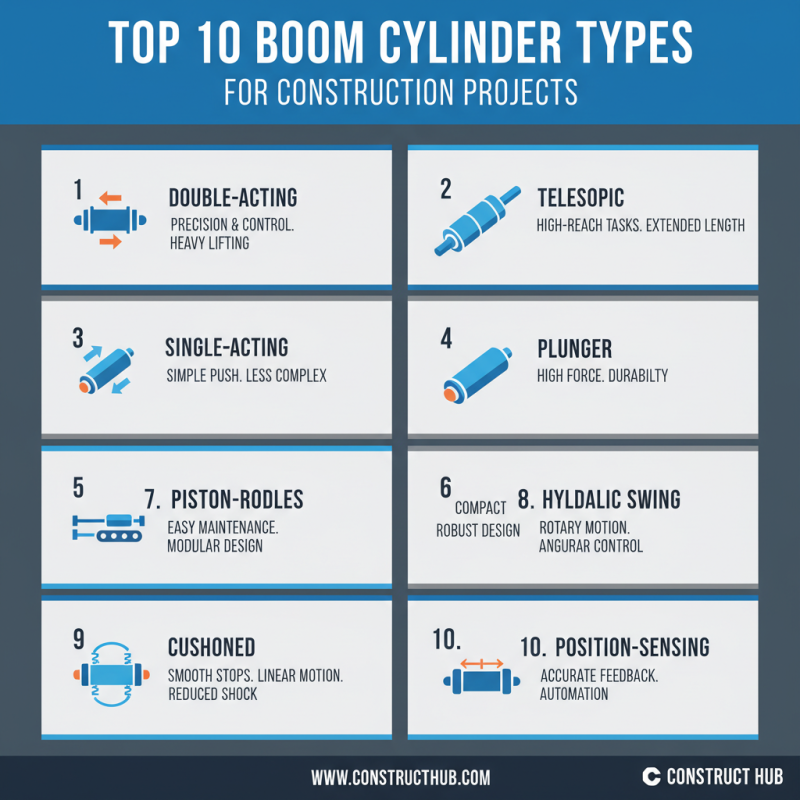
When it comes to construction projects, choosing the right boom cylinder is crucial. Each type has distinct features that can significantly affect performance. For instance, double-acting cylinders provide more control and responsiveness. They allow for more precise movements, making them ideal for heavy lifting. Another option is the telescopic boom cylinder. This type extends to great lengths, making it suitable for high-reach tasks.
Hydraulic boom cylinders are popular due to their ability to handle substantial loads. They are efficient and reliable for various applications. On the other hand, pneumatic cylinders offer lighter usage scenarios. They are useful for tasks that do not require heavy lifting but still need swift movements. It’s essential to consider the cylinder's operating pressure too, as it affects overall functionality.
Choosing a boom cylinder is not always black and white. Sometimes, factors like workspace constraints and load requirements can lead to tough decisions. You may find that a specific type benefits certain projects while being less effective elsewhere. There’s always room for reflection on what works best for your unique situation. Experimentation can lead to better efficiency and performance.
Comparative Analysis of Boom Cylinder Performance
The performance of boom cylinders is critical in construction. Various types serve specific functions, influencing efficiency and safety on job sites. Hydraulic boom cylinders, for instance, operate under high pressure and are often preferred for their strong lifting capabilities. Studies indicate they can handle loads up to 75% more than pneumatic variants.
When assessing performance, factors like stroke length and speed are vital. A report by the Hydraulic Institute highlights that cylinders with a longer stroke can increase reach and versatility but may slow down response time. A 2022 survey found that 62% of construction managers prioritize speed over reach, affecting their choice of cylinder type.
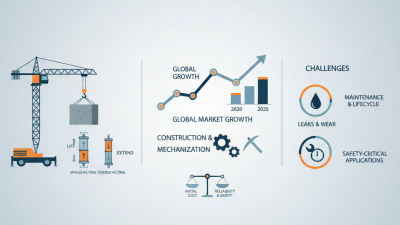
However, it's essential to recognize the trade-offs. While selecting a high-performance boom cylinder, some models may face issues like fluid leakage or overheating. According to industry analysts, these problems can reduce operational efficiency by up to 30%. This illustrates the need for ongoing evaluation of both performance and maintenance practices in selecting the appropriate boom cylinder type.
Maintenance Tips for Longevity of Boom Cylinders in Construction
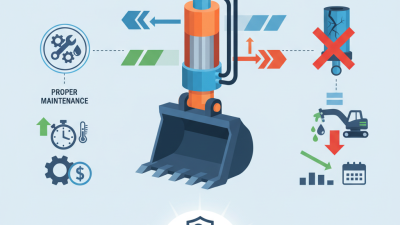
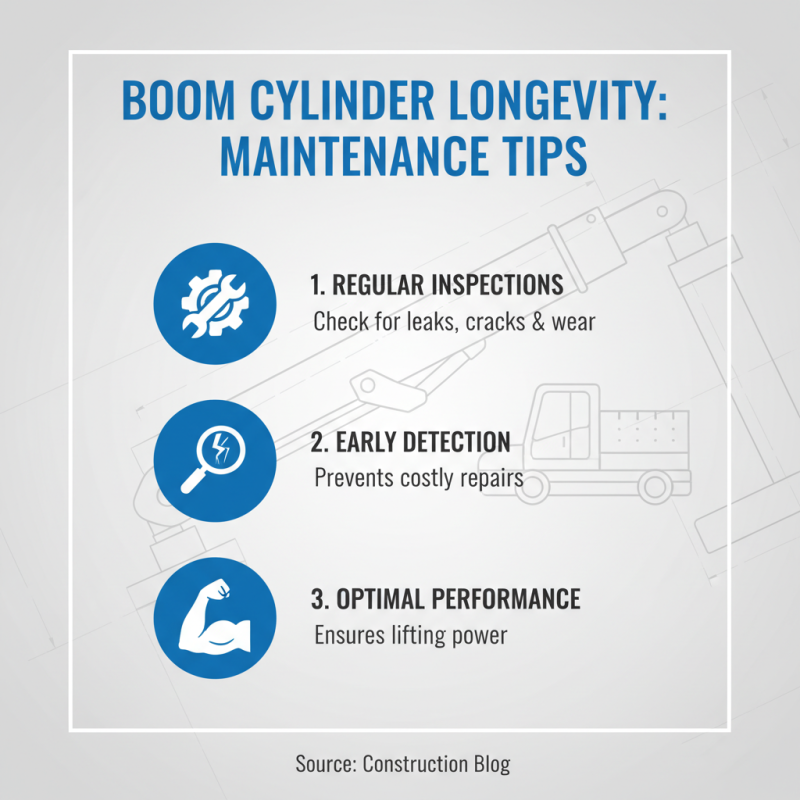
Boom cylinders are crucial in construction, providing the lifting power needed for heavy loads. Proper maintenance is essential to ensure their longevity and efficiency. One key aspect is regular inspections. Check for leaks, cracks, and signs of wear. This practice can help catch issues before they lead to costly repairs.
Cleaning boom cylinders is often overlooked. Dirt and debris can cause damage over time. Use a soft cloth to wipe down the exterior and clear any blockages. Additionally, lubrication is vital. Make sure to apply the recommended lubricant to prevent corrosion and ensure smooth operation.
Even with good practices, wear and tear is inevitable. Acknowledge that every boom cylinder will eventually need part replacements. Keeping a close eye on performance can help identify when maintenance is necessary. Neglect can lead to breakdowns, causing delays in projects. Being proactive can save time and money in the long run.

 +86 13794985240
 CONTACT NUMBER
 CONTACT NUMBER