2026 How to Choose the Best Air Filter for Your Home?
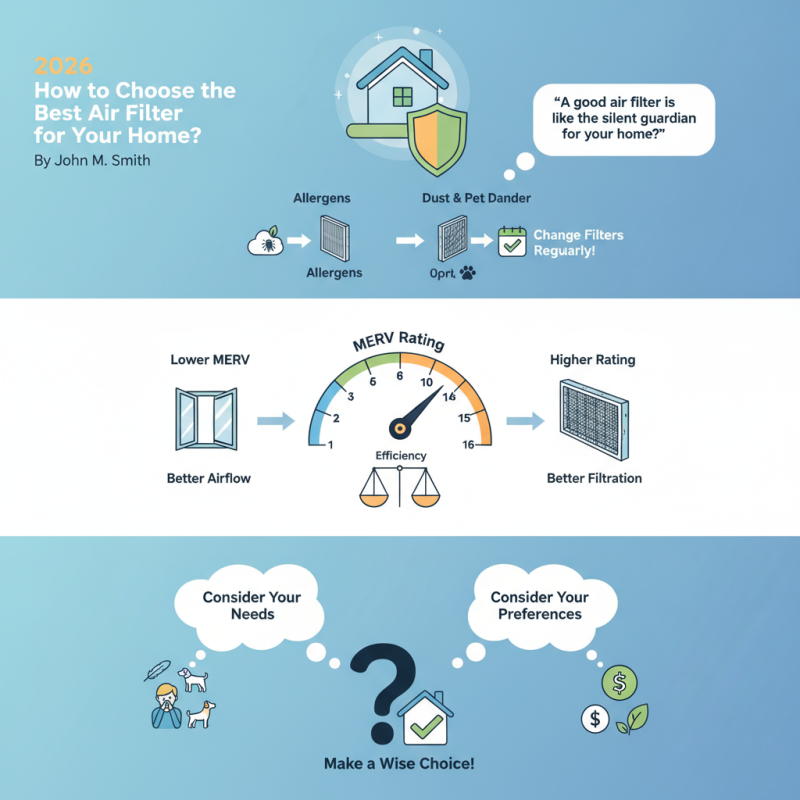
Choosing the right air filter for your home is crucial for maintaining indoor air quality. As John M. Smith, an air filtration expert, once said, “A good air filter is like a silent guardian for your home.” This emphasizes the importance of selecting the best filter to protect your family.
Air filters come in various types, each serving unique purposes. Some focus on allergens, while others target dust and pet dander. It's easy to overlook these details. Think about how often you change your filters. Neglecting this task can lead to poor air quality. Many homeowners are unaware of the potential impact.
Understanding MERV ratings is essential too. A higher MERV means better filtration, but it could also restrict airflow. Balancing efficiency and airflow is key. You may find yourself pondering which filter is worth your investment. Reflecting on your needs and preferences will help you make a wise choice. Your home deserves the best air filter you can find.
Understanding the Importance of Air Filters in Home Air Quality
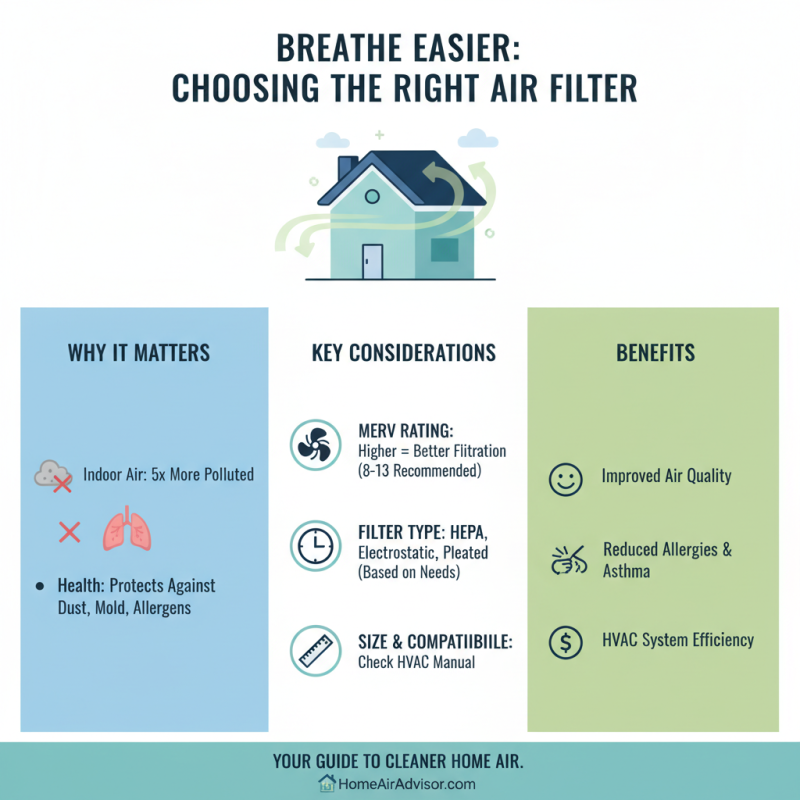
Choosing the right air filter can significantly impact your home’s air quality. Research indicates that indoor air can be up to five times more polluted than outdoor air. This pollution often includes dust, mold spores, and allergens. These particles can pose a risk to your health, especially for sensitive groups like children and the elderly.
When selecting an air filter, consider the MERV rating. Filters with a rating of 8-11 are effective at trapping particles, while those rated 12 or higher can capture smaller allergens. A study by the EPA shows that improving air quality can reduce respiratory illnesses. However, it's essential to remember that not all filters are created equal. Some may not fit your system or may require frequent replacement, leading to inefficiency.
Tips: Regularly check and replace filters to maintain optimal performance. Use filters that fit snugly in your system to avoid air bypass. Ensure you choose the right MERV rating based on your needs. Balancing air quality with filter maintenance is vital. Still, many overlook how often they should be swapped out. This oversight can diminish the benefits of cleaner air. Keep a log or set reminders to help you stay on track.
Types of Air Filters: HEPA, Carbon, Electrostatic, and More
When it comes to air filters, understanding the types available is crucial. HEPA filters are well-known for capturing small particles. They can remove dust, pollen, and even some bacteria. This makes them a popular choice for many homes. However, they may not be the best for every situation. People with odors or chemical sensitivities might find HEPA filters lacking in that area.
Activated carbon filters excel in removing gases and odors. They work by trapping pollutants in their porous structure. This can make a significant difference in air quality for those sensitive to smells. However, they may not filter out all particles effectively. It's a balancing act, choosing between particle removal and odor control.
Electrostatic filters offer yet another option. These filters create an electric charge to attract particles. They're reusable, which is a plus for cost-conscious homeowners. Still, they require regular cleaning to maintain efficiency. Not all electrostatic filters are created equal, leading to potential confusion. Evaluating each type carefully can help you make better choices. Air quality affects everyone in the home, so take your time.
Factors to Consider When Choosing an Air Filter for Your Home
Choosing the right air filter for your home can significantly impact your indoor air quality. Several factors need attention. Consider the filter's MERV rating. This rating shows how effectively it captures airborne particles. A higher MERV rating means better filtration. Filters with a MERV rating of 11-13 can capture pollen, dust, and pet dander (ASHRAE 2020). However, high-rated filters can restrict airflow, requiring a balance.
Next, evaluate filter type. HEPA filters are popular for their high efficiency. They remove at least 99.97% of particles that are 0.3 microns or larger. Yet, they can be more expensive and require regular replacement. A pleated air filter can be a cost-effective alternative. It features more surface area for capturing pollutants, but you must change it regularly.
Consider your home environment. If you have allergies or pets, invest in better filtration. According to the EPA, indoor pollution levels can be 2-5 times higher than outdoors. All these factors matter. Reflect on your needs and choose wisely. Balancing cost, efficiency, and maintenance can make a difference. It’s a personal decision that shouldn’t be rushed.
2026 How to Choose the Best Air Filter for Your Home? - Factors to Consider When Choosing an Air Filter for Your Home
| Factor |
Description |
Importance Level |
| MERV Rating |
Minimum Efficiency Reporting Value, measures the filter's ability to capture particles. |
High |
| Filter Type |
Options include HEPA, electrostatic, and pleated filters, each with different efficiencies. |
Medium |
| Size Compatibility |
Must fit the air system correctly to function effectively. |
High |
| Filter Life |
How long a filter lasts before needing replacement. |
Medium |
| Airflow Resistance |
Balancing filtration efficiency with airflow to ensure system performance. |
High |
| Allergen Control |
Filters designed to capture pollen, dust mites, pet dander, etc. |
High |
How to Determine the Right Size and Fit for Your Air Filter
Choosing the right size and fit for your air filter is crucial for maintaining good air quality. Begin by measuring your air duct’s dimensions. Most filters come in standard sizes, but you may find some that don’t quite fit. If your home has custom vents, it might be a bit tricky. A filter that is too small won’t capture pollutants effectively, while one that is too large could damage your HVAC system.
Consider the thickness of the filter as well. Filters generally range from 1 to 5 inches thick. Thicker filters tend to have a higher filtration efficiency, but they must fit correctly in your system. Installing a filter that is too thick might obstruct airflow. Take the time to check the manufacturer’s specifications. It’s a common mistake to overlook this detail, which leads to wasted money and ineffective air purification.
Don’t forget about the filter’s MERV rating too. A higher rating means better filtration, but be cautious. A filter with too high a rating may restrict airflow. Balancing filter efficiency with your system's capability can be challenging. Always aim for the best fit while considering your home’s needs and your system's limitations.
2026 How to Choose the Best Air Filter for Your Home?
This chart illustrates the effectiveness of different air filter types based on their Minimum Efficiency Reporting Value (MERV) ratings and recommended area coverage in square feet. Understanding these ratings can help you select the right air filter for your home environment.

 +86 13794985240
 CONTACT NUMBER
 CONTACT NUMBER