Exploring the Power and Precision of the Breaking Hammer Tool
The Breaking Hammer tool represents an essential innovation in construction and demolition. Its power and precision make it vital for heavy-duty projects. This tool is designed for efficiency, enabling workers to complete tasks faster and safer. However, using a Breaking Hammer requires skill and awareness. Improper handling can lead to accidents and damage.
Understanding the mechanics of the Breaking Hammer is crucial for optimal results. This tool combines weight and force to break tough materials. Users must learn its nuances to harness its full potential. Overconfidence can lead to mistakes, emphasizing the importance of training.
Despite its advantages, the Breaking Hammer is not without limitations. Some may struggle with its weight, leading to fatigue. Recognizing these challenges can help users adapt their techniques for better performance. In essence, mastering the Breaking Hammer demands both expertise and reflection on one's approach.
Understanding the Breaking Hammer Tool: Definition and Purpose
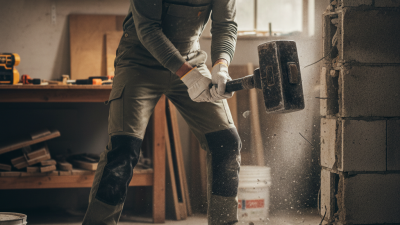
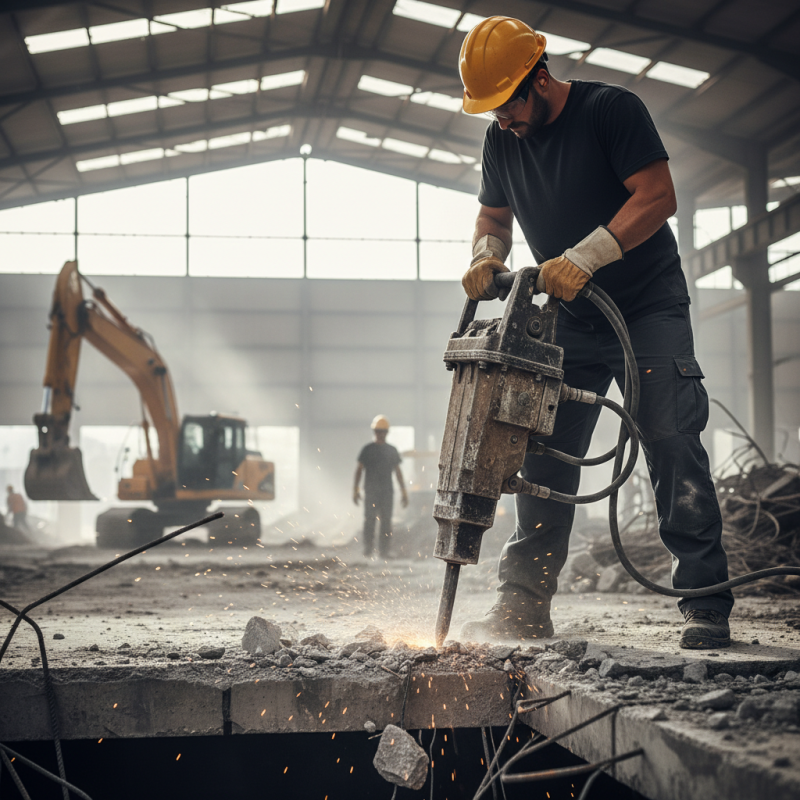
The breaking hammer tool is a powerful instrument widely used in various industries. Its primary purpose is to break down surfaces and materials with precision. This tool is particularly useful in construction and demolition work. Workers often rely on it to handle tough concrete or rock, making their tasks more efficient.
Understanding the breaking hammer tool requires knowing its components. These tools typically feature a heavy head and a sturdy handle. The design allows for effective impact absorption and control. However, using this tool isn't without challenges. Operators must maintain focus to avoid accidents, especially in busy environments. The risk of fatigue can also lead to mistakes.
Proper training is essential for users of the breaking hammer tool. This ensures effectiveness and safety. Many workers undergo hands-on training to grasp the tool's dynamics. This practical experience matters. It highlights the importance of skill and awareness while using such a powerful device. Without it, even high-quality tools can become hazardous.
Historical Evolution of the Breaking Hammer Tool in Construction
The breaking hammer tool has a rich history in construction, evolving through centuries of innovation. Initially used by ancient builders, the tool has transformed significantly. The earliest breaking hammers resembled rudimentary stones, employed to crush materials like clay and stone. Over time, iron and steel replaced these primitive designs, enhancing their durability and effectiveness.
According to a report by the Construction Industry Institute, the modern breaking hammer tool increases efficiency by up to 30%. This improvement stems from advancements in material design and ergonomics. However, not all updates have been flawless. Some designs, while powerful, have led to operator fatigue and safety concerns. Maintaining precision in tool usage is critical to minimize accidents and injuries on construction sites.
Recent studies suggest that up to 15% of accidents in construction relate to improper tool handling. This statistic highlights the need for training and awareness. Even with advanced technology, the human element remains a challenge. Operators must balance tool power with personal safety. As the industry continues to evolve, a focus on training will be vital for harnessing the full potential of the breaking hammer tool.
Key Features and Specifications of Modern Breaking Hammers
Breaking hammers are essential tools in construction and demolition. Their primary function is to break concrete and other hard surfaces. The latest models offer significant improvements in power and precision. They are lightweight yet robust, making them easier to handle. The ergonomic designs reduce operator fatigue during extended use.
When considering the specifications, look for hammer weight. Heavier models provide more force, while lighter ones offer more maneuverability. Pay attention to the impact rate, measured in blows per minute. A higher rate allows for faster work. Additionally, check the vibration levels; lower vibrations improve comfort and safety.
Tips: Always wear protective gear when using breaking hammers. The noise can be loud, so hearing protection is essential. Regular maintenance of the tool ensures longevity. Inspect the tool for any wear or damage before use. This can prevent accidents and improve performance.
Understanding your project requirements helps in choosing the right hammer. Different jobs may need varying levels of power and precision. Don't overlook the importance of selecting attachments. They can enhance the tool's versatility.
Applications of Breaking Hammers in Various Industries
Breaking hammers have become essential tools in various industries due to their power and precision. In construction, these tools are vital for demolishing concrete structures. Workers can easily break through thick walls. This capability saves time and reduces manual labor. The efficiency of breaking hammers makes them preferred over traditional tools.
In mining, breaking hammers are indispensable for rock extraction. They provide the necessary force to fracture hard materials. Operators can control the hammer's impact, allowing for precision work. This control minimizes damage to surrounding areas and ensures safety. Despite their effectiveness, operators must be trained. Misuse can lead to accidents or equipment failure.
Moreover, breaking hammers find applications in the oil and gas industry. They aid in creating access points for drilling. However, the vibrations can pose risks to workers. Regular inspections and maintenance are essential to avoid such issues. The experience of skilled operators significantly impacts performance. Attention to detail can make a difference in efficiency and safety.
Safety Practices and Maintenance Tips for Breaking Hammer Users
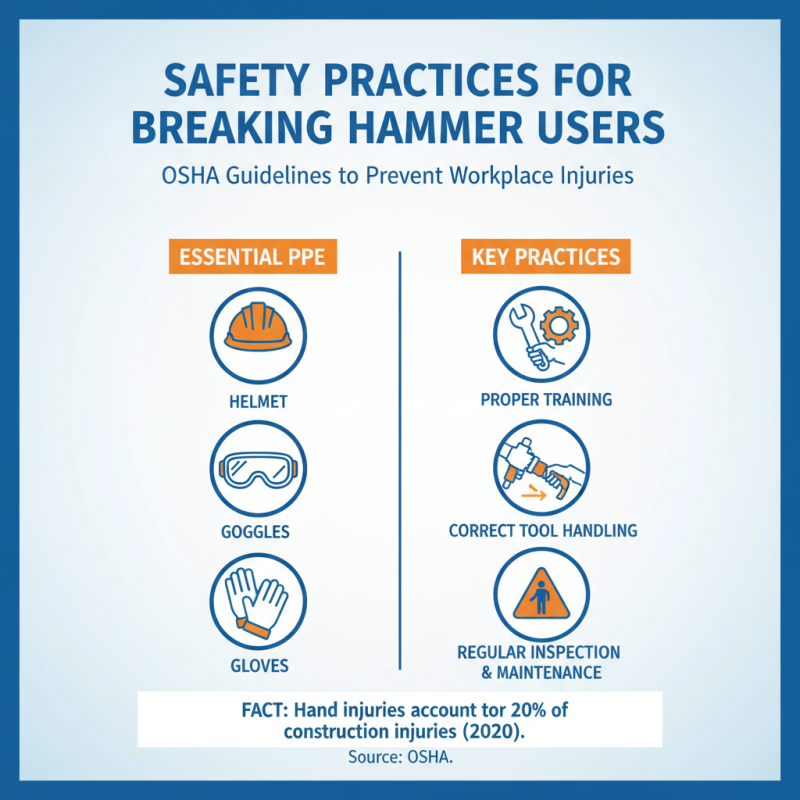
When using breaking hammers, safety practices are essential. The Occupational Safety and Health Administration (OSHA) reports that improper tool handling leads to a significant percentage of workplace injuries. Users should wear appropriate personal protective equipment (PPE), including helmets, goggles, and gloves. In 2020, nearly 50,000 hand injuries were reported in the construction industry. This accounts for around 20% of all injuries. Proper training in tool operation is critical.
Maintenance of breaking hammers is equally vital. Regular inspection can prevent tool failures and accidents. A study by the National Institute for Occupational Safety and Health (NIOSH) indicates that about 80% of tool-related accidents stem from equipment malfunctions. Users should check for wear and tear, paying special attention to the chisel and head. A clean tool ensures better performance. Greasing moving parts regularly can extend the lifespan of your tool significantly.
User experience can vary dramatically based on maintenance habits. Neglecting simple maintenance may lead to increased vibration, affecting precision. Each impact should feel assured, not excessive. While some may overlook these details, they are crucial for safe operation. Integrating structured maintenance routines into daily practices can enhance both safety and efficiency. The investment of time in upkeep ultimately yields better performance and reliability in breaking hammer usage.

 +86 18578756148
 CONTACT NUMBER
 CONTACT NUMBER
 CONTACT NUMBER
 CONTACT NUMBER