Why Do Industries Prefer Boom Cylinders for Heavy Lifting Tasks?
The use of Boom Cylinders in heavy lifting tasks has gained significant traction across various industries. These hydraulic devices offer remarkable advantages. They provide the necessary force to lift substantial loads safely. This capability is crucial in sectors like construction and manufacturing.
Boom Cylinders are designed for efficiency and reliability. They optimize lifting operations, enhancing productivity and safety standards. Yet, the reliance on these cylinders also raises questions. How do industries choose the right types? What factors influence their effectiveness in the field?
Investing in Boom Cylinders reveals a commitment to strong performance. However, the costs can be substantial. Companies must weigh these expenses against potential gains. Understanding the nuances of Boom Cylinder selection can make a difference in operational outcomes.
Understanding Boom Cylinders and Their Mechanisms
Boom cylinders are essential in many heavy lifting tasks. Their design allows for impressive mechanical advantage. They consist of a cylinder and piston that work together. When hydraulic fluid enters, it pushes the piston. This movement generates powerful lifting force.
Industries favor boom cylinders for their efficiency. They can lift heavy loads with minimal effort. The compact design makes them versatile. Boom cylinders can easily fit into tight spaces, perfect for construction sites. Their ability to extend and retract provides extra reach.
**Tip:** Always check the hydraulic fluid levels. Low fluid can lead to functionality issues.
Using boom cylinders may seem straightforward. However, proper training is crucial. Operators must understand weight limits and load balancing. A small mistake can cause accidents. Regular maintenance is essential as well. Wear and tear can compromise their performance.
**Tip:** Regularly inspect seals and connections. This can prevent costly downtime.
Why Do Industries Prefer Boom Cylinders for Heavy Lifting Tasks?
This bar chart illustrates the reasons industries prefer boom cylinders for heavy lifting tasks, showcasing key factors such as Load Capacity, Stability, Versatility, Maintenance Ease, and Cost Efficiency.
Advantages of Boom Cylinders in Heavy Lifting Applications
Boom cylinders are increasingly favored in heavy lifting tasks for their unique advantages. These cylinders can deliver impressive lifting power with a relatively compact design. Their strong construction allows them to handle substantial loads without compromising stability. This is crucial when dealing with heavy materials and equipment in industrial settings.
Another key advantage is their versatility. Boom cylinders are often used in various applications, from construction to manufacturing. They can extend and retract easily, providing greater control over lifting tasks. This flexibility makes them an excellent choice for dynamic environments where load sizes can vary significantly. However, it's essential to ensure proper maintenance and usage to avoid potential failures.
While their benefits are evident, boom cylinders require careful consideration. Operators must understand their limits and capabilities. Misjudging weight can lead to accidents. Regular inspections and training can mitigate risks, but human error still exists. Balancing efficiency with safety should be the priority in every heavy lifting operation.
Why Do Industries Prefer Boom Cylinders for Heavy Lifting Tasks? - Advantages of Boom Cylinders in Heavy Lifting Applications
| Advantage |
Description |
Common Applications |
| High Load Capacity |
Designed to handle heavy weights effortlessly, making them ideal for demanding tasks. |
Construction, Shipping, Heavy Equipment Maintenance |
| Stability |
Provides a stable platform during lifting, reducing the risk of tipping over. |
Warehouse Operations, Heavy Lifting in Manufacturing |
| Versatility |
Can be used in various conditions and environments, adaptable for different tasks. |
Oil & Gas, Mining, Aerospace |
| Increased Efficiency |
Speeds up lifting processes, saving time and resources during operations. |
Logistics, Facility Management, Bridge Construction |
| Safety Features |
Incorporates advanced safety mechanisms to protect operators and equipment. |
Cranes, Heavy Transport, Sinkhole Repairs |
Comparing Boom Cylinders to Other Lifting Solutions
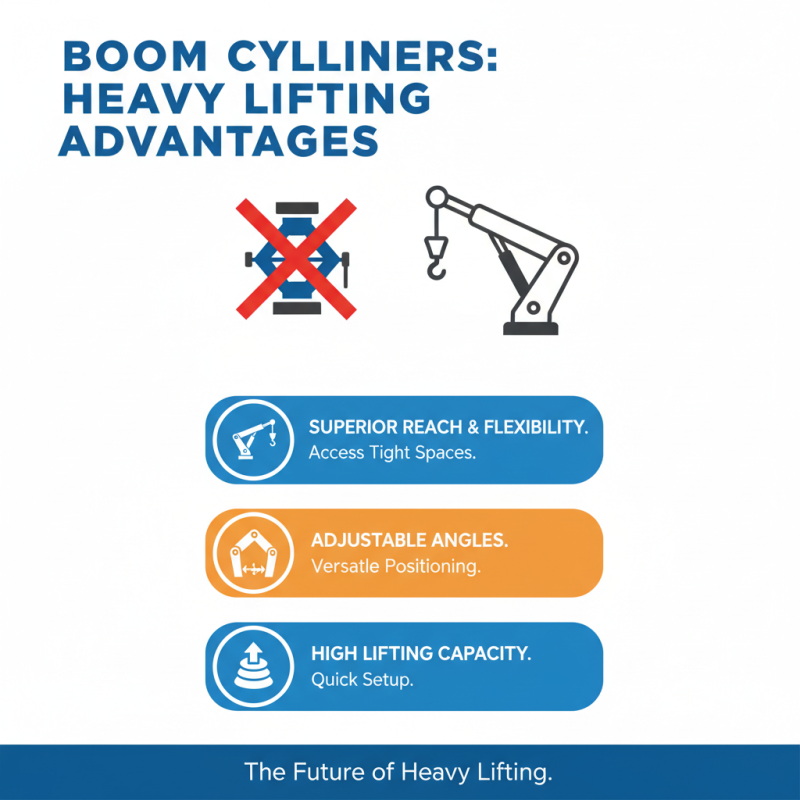
Boom cylinders offer distinct advantages for heavy lifting tasks compared to other lifting solutions. Unlike traditional hydraulic jacks, boom cylinders excel in providing greater reach and flexibility. They can be easily adjusted to different angles, making them ideal for lifting in tight spaces. They deliver impressive lifting capacities without requiring extensive setups.
When considering alternatives, winches or pulley systems come to mind. While they are effective, they often lack the versatility of boom cylinders. Winches can struggle with heavy loads, especially when lifting vertically. Boom cylinders maintain stability under heavy weight, enhancing safety during operations.
Tip: When choosing lifting equipment, analyze the specific challenges of your tasks. Assessing weight, height, and space limitations can influence your decision.
Tip: Regular maintenance of boom cylinders ensures optimal performance. Inspect seals, hoses, and connections to prevent leaks and failures. This can save time and avoid safety hazards.
In some scenarios, using boom cylinders may reveal some shortcomings. For instance, their size can be cumbersome in compact environments. Understanding these limitations helps improve decision-making for better lifting solutions. Balancing needs and limitations is crucial in choosing the right equipment.
Safety Considerations When Using Boom Cylinders
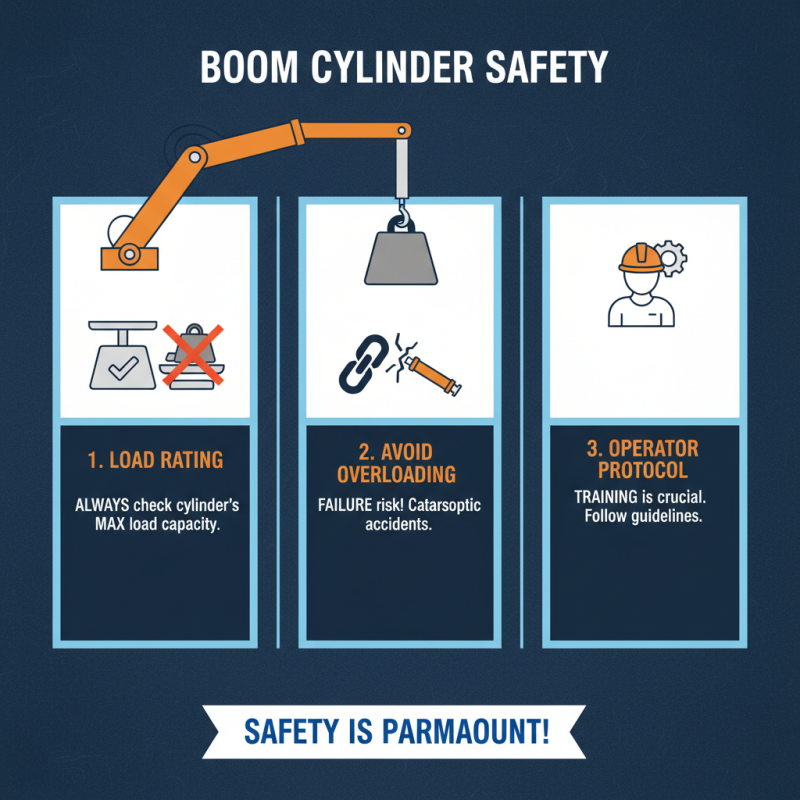
When lifting heavy loads, safety is paramount. Boom cylinders, while highly effective, come with specific safety concerns that users must address. These hydraulic systems enable powerful lifting, but improper use can lead to accidents. Operators must ensure that the cylinder is rated for the load they intend to lift. Overloading can cause equipment failure, leading to potential injury.
Tips for safe operation include regular inspections of the boom cylinder. Checking for leaks, cracks, and wear is essential. Additionally, operators should always work with a partner. Communication is key to a safe lifting process. Always use designated lift points and avoid lifting loads that exceed the cylinder’s capacity.
Training is critical. Operators need to understand how boom cylinders function. Even experienced users can miss important details. Misjudgments about the weight of a load or the stability of the ground can create hazards. Therefore, continual education and practice are necessary for safe operation. Each lift should be approached with caution and care to minimize risks.
Industry Applications of Boom Cylinders for Heavy Lifting
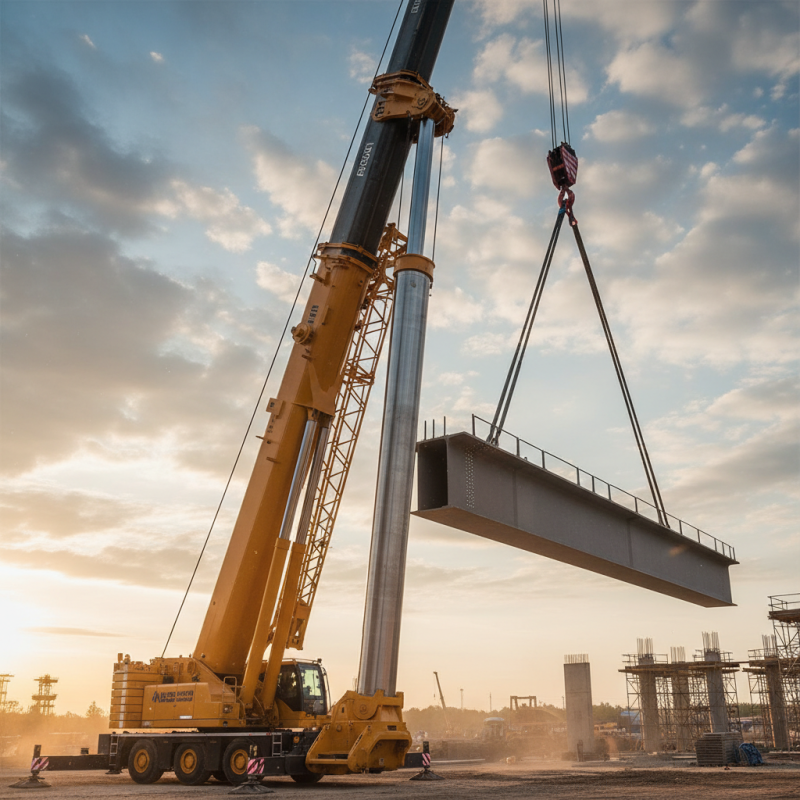
Boom cylinders are essential in various industries for heavy lifting tasks. They provide the necessary strength and control when moving substantial loads. Construction sites often use boom cylinders to lift steel beams and concrete panels. This process enhances efficiency and minimizes labor costs. In manufacturing, these cylinders help carry heavy machinery during assembly. Operators can maneuver large items with precision, greatly reducing the risk of accidents.
In the shipping industry, boom cylinders are invaluable. They facilitate the loading and unloading of containers from ships. The ability to reach high stacks of cargo allows for better space management. However, challenges remain, such as ensuring the cylinders are properly calibrated. Improper settings can lead to equipment failure. Training for operators is crucial but sometimes overlooked. Ensuring everyone understands the workings of boom cylinders can prevent mishaps and injuries.
The oil and gas sector also relies on boom cylinders. They are used to lift and position large drilling equipment. This work requires utmost precision and reliability. Operators must constantly assess the environment. Wind or ground stability can affect lifting tasks significantly. Awareness of these factors is essential for safety and efficiency.

 +86 13794985240
 CONTACT NUMBER
 CONTACT NUMBER