

Leave Your Message

Top 10 Air Filter Manufacturers Worldwide?

Air Filter manufacturing is no longer a narrow industrial category. It now supports hospitals, semiconductor plants, offices, homes, vehicles, and data centers. Demand is rising, but market estimates vary because research firms define filtration products differently.

Fortune Business Insights valued the global air filters market at approximately USD 15.33 billion in 2023. It projects the market could reach USD 23.80 billion by 2032. MarketsandMarkets reports different figures, estimating growth from about USD 14.7 billion in 2024 to USD 20.5 billion by 2029. That gap matters. It reminds readers to compare product categories, regions, and research methods carefully.

Performance is not measured by brand visibility alone. Efficiency, pressure drop, filter life, energy use, testing standards, and supply reliability deserve equal attention. A hospital-grade HEPA filter faces different demands from a residential HVAC filter. One model cannot serve every room.

Dr. Richard Corsi, an indoor-air-quality expert, has stated, “Air cleaners are not a substitute for ventilation.” His point is practical. A filter may capture particles, yet poor airflow design can still leave pollutants near occupants.

This guide examines the Top 10 Air Filter Manufacturers Worldwide through a technical and commercial lens. It considers manufacturing scale, certification, innovation, application coverage, and customer experience. Rankings remain imperfect. Some companies disclose more data than others. Readers should verify current specifications before making purchasing decisions.

Top 10 Air Filter Manufacturers Worldwide?

Scope of the Global Air Filter Manufacturing Industry

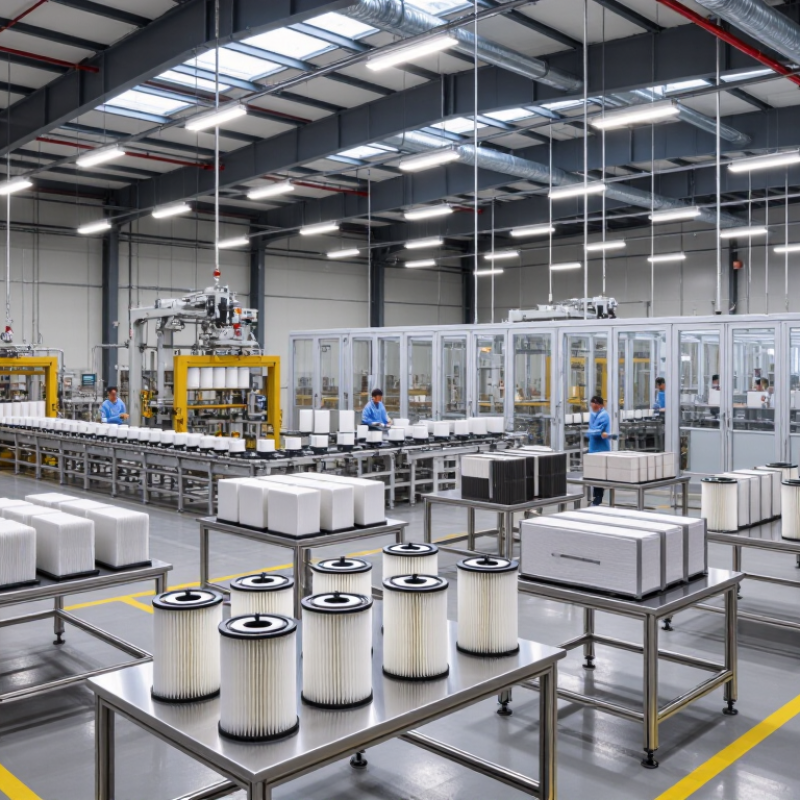
The global air filter manufacturing industry serves homes, offices, factories, hospitals, vehicles, and data centers. Its scope includes filter media, frames, seals, housings, testing equipment, and replacement services. Manufacturers commonly produce panel filters, bag filters, cartridge filters, and high-efficiency filtration systems. Each design balances airflow, particle capture, energy use, and service life.

Demand is expanding as cities manage fine particles, industrial emissions, allergens, and indoor air quality risks. Construction projects require ventilation filters before buildings become occupied. Hospitals need carefully tested filtration for controlled environments. Electronics plants demand cleaner air because microscopic particles can damage sensitive production. Food processing sites also use washable or disposable systems around preparation areas.

Regional manufacturing patterns remain diverse. Asia supports large-scale production and growing domestic demand. Europe emphasizes energy performance, documentation, and building efficiency. North America combines replacement markets with industrial and commercial applications. Testing often examines pressure drop, particle efficiency, leakage, moisture resistance, and fire behavior. Small details matter. A poor seal can reduce real-world performance, even when the filter media looks advanced.

Market data is not perfectly comparable. Some reports combine residential products with specialized industrial systems. That can distort growth estimates and purchasing decisions. Manufacturers also face shortages in synthetic fibers, metal components, and testing capacity. Better traceability would improve trust. More field evidence is still needed, especially for filters used in changing humidity and dust conditions.

Criteria for Ranking the Top 10 Air Filter Manufacturers

Ranking the top 10 air filter manufacturers requires more than comparing sales figures. Verified filtration performance should lead the assessment.

ISO 16890 measures particle removal through ePM1, ePM2.5, and ePM10 categories. ASHRAE Standard 52.2 also evaluates particle efficiency across different sizes. These tests help separate laboratory claims from usable performance.

Energy impact deserves equal attention. The International Energy Agency reports that buildings consume about 30% of global final energy. A filter with high efficiency but excessive pressure drop can increase fan energy and operating costs.

A credible ranking should examine pressure-drop data, dust-holding capacity, service life, production consistency, and independent certification.

The World Health Organization also reports that 99% of people breathe air exceeding its guideline limits. That makes dependable filtration more than a purchasing detail. It becomes a maintenance and health decision.

Tips:

Compare total lifecycle cost, not only the purchase price. Request test reports for the exact model. Check whether results reflect clean filters or loaded filters. A ranking can still mislead when supply reliability, local technical support, and disposal practices are ignored. I would also question impressive claims without transparent testing. Sometimes, the strongest specification is simply easier to verify.

Profiles of the Top 10 Air Filter Manufacturers Worldwide

Top 10 Air Filter Manufacturers Worldwide

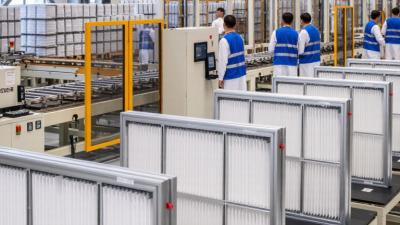
The leading ten air filter manufacturers represent different strengths rather than one universal standard. Some focus on commercial HVAC systems, while others specialize in hospitals, laboratories, factories, or vehicle filtration. Several operate large testing facilities and publish pressure-drop, particle-capture, and service-life data. Others are valued for custom dimensions and quick regional delivery. Their product portfolios commonly include panel filters, pleated filters, bag filters, cartridge systems, and high-efficiency units. A few concentrate on cleanroom applications, where airflow stability matters as much as particle control. Industrial specialists often design filters for dust, oil mist, smoke, or chemical vapors. Automotive-focused producers emphasize vibration resistance and compact housing designs. Sustainable manufacturers increasingly use recyclable frames and lower-energy media. However, marketing claims still require careful checking.

Tips: Compare independent test reports, not just efficiency labels. Confirm the filter’s size, airflow range, pressure drop, and replacement schedule. Ask for batch traceability and installation guidance. A filter that captures more particles may also consume more fan energy. That trade-off is easy to overlook.

A reliable manufacturer should explain how its filters perform in real equipment, not only in controlled laboratories. Look for documented quality systems, trained technical teams, and clear warranty terms. Regional service can reduce delivery delays, especially for hospitals and production sites.

My practical view is slightly cautious: a famous supplier may not suit every building. Local dust levels, humidity, fan capacity, and maintenance habits can change results. Even the best filter fails when installed with visible gaps. That detail deserves more attention.

Key Products, Technologies, and Markets Served

Top 10 Air Filter Manufacturers Worldwide?
Key Products, Technologies, and Markets Served

The leading ten manufacturers compete across residential, commercial, and industrial filtration. Their portfolios commonly include pleated HVAC filters, bag filters, cartridge units, HEPA filters, and activated carbon panels. Each product targets a different contaminant. Dust, smoke, oil mist, and microscopic particles need different media designs.

Modern suppliers increasingly use synthetic fibers, nanofiber coatings, and electrostatic treatments. These technologies can improve particle capture while reducing airflow resistance. Low pressure drop matters in hospitals, offices, factories, and data centers. Some advanced systems add sensors that track pressure, humidity, and filter loading. Useful data, but sensors do not replace scheduled inspections.

Markets served vary widely. Cleanrooms require tightly controlled HEPA or ULPA filtration. Automotive plants often need paint-booth and process-air filters. Mining, cement, food processing, and power facilities demand stronger housings and specialized dust collection. Residential products usually prioritize quiet operation, compact sizing, and affordable replacement cycles.

Performance claims should be checked carefully. Independent laboratory testing, traceable production records, and recognized methods such as ISO 16890 or EN 1822 support reliable comparisons. No ranking is absolute. A manufacturer with excellent hospital products may not suit a high-dust factory. In practice, installation quality, sealing, maintenance, and correct sizing can matter as much as the filter media itself.

Top 10 Air Filter Manufacturers Worldwide — Key Technologies and Markets Served

Rated-efficiency benchmarks across widely used filtration classes. The comparison avoids company and brand data; test conditions differ by standard and should not be interpreted as a direct product ranking.

Market coverage: These technologies are commonly applied in commercial HVAC, residential air cleaning, industrial process ventilation, healthcare facilities, pharmaceutical manufacturing, laboratories, data centers, cleanrooms, transportation, and gas-phase odor or VOC control. MERV values follow ASHRAE 52.2 efficiency bands; HEPA and ULPA figures use their respective particle-size or most-penetrating-particle-size test conventions.

How to Choose the Right Air Filter Manufacturer

Top 10 Air Filter Manufacturers Worldwide: How to Choose the Right Air Filter Manufacturer

A global ranking can attract attention, but it cannot replace technical evaluation. The U.S. Environmental Protection Agency reports that indoor pollutant levels may be two to five times higher than outdoor levels. Therefore, the right manufacturer must offer verified filtration performance, not attractive packaging. Check independent test reports under ASHRAE Standard 52.2 or ISO 16890. These standards show how effectively a filter captures particles at different sizes.

Look beyond efficiency ratings. Ask for pressure-drop data, airflow conditions, dust-holding capacity, and expected service life. A filter that captures more particles may also restrict airflow and increase fan energy. The International Energy Agency consistently identifies buildings as major energy users, so operating cost deserves careful review. Request samples and measure airflow across a clean filter. Then test it after several weeks of real dust exposure.

Manufacturing consistency matters. Confirm material traceability, batch inspection, dimensional tolerances, fire-safety documentation, and replacement availability. A reliable supplier should explain whether performance changes between production lots. It should also provide clear installation guidance and disposal information. Pricing can mislead.

A cheap filter may require frequent replacement, create higher pressure loss, or fail to fit tightly around the frame. I would not trust a glossy ranking alone. Compare evidence, site conditions, maintenance habits, and total ownership cost before selecting a manufacturer. Even experienced buyers can overlook noise, leakage, or storage damage. That is where careful questioning becomes valuable.