+86 18578756148


China’s center joint industry supports excavators, loaders, articulated vehicles, and other equipment that must turn, carry loads, and transfer hydraulic power. A reliable Center Joint connects moving sections while protecting oil passages, seals, bearings, and structural alignment. Small defects can create large problems, including leakage, steering resistance, vibration, or unplanned downtime.
Li Wei, a senior hydraulic-systems engineer with experience in construction equipment, says, “A center joint should be judged by its sealing stability, not its appearance.” This practical view matters when comparing China manufacturers and suppliers. A polished surface is useful, but it cannot replace pressure testing, dimensional inspection, material verification, and field experience. Buyers should examine port design, rotation range, working pressure, temperature tolerance, and seal compatibility. They should also ask how suppliers control machining accuracy and final assembly.
Details matter here.
For example, a properly finished joint should rotate smoothly without noticeable play. Its sealing surfaces should remain clean after repeated movement. Packaging also deserves attention. A scratched port or missing protective cap can introduce contamination before installation. That mistake is easy to overlook.
Reliable Chinese suppliers usually provide drawings, inspection records, installation guidance, and responsive technical support. However, product claims still require independent checking. Some catalog information may be incomplete. That is a weakness worth acknowledging. Buyers should request samples, confirm application conditions, and compare test results before placing large orders.
This guide examines China’s best Center Joint manufacturers and suppliers through engineering quality, customization capability, production consistency, delivery performance, and after-sales reliability. The goal is practical selection, not promotional ranking.
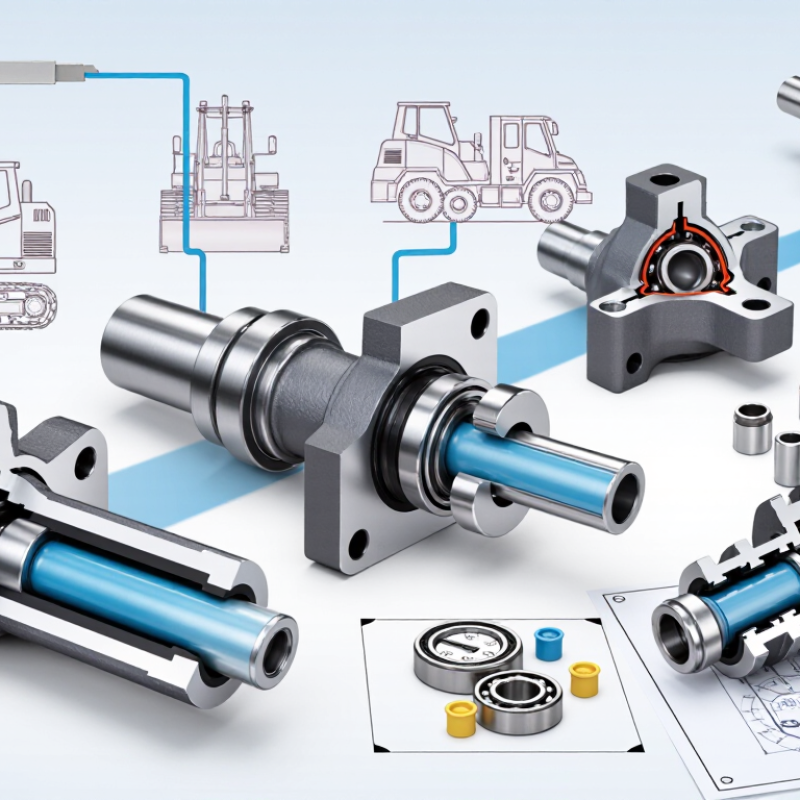
A center joint, also called a rotary manifold, transfers hydraulic oil between an excavator’s upper body and undercarriage. Its internal passages keep circuits connected while the cab and boom rotate through 360 degrees. Separate channels carry oil to travel motors and, depending on the machine, auxiliary equipment. Seals between passages matter: wear can cause leakage, pressure loss, or unwanted movement. Small faults can become obvious when tracks slow or an attachment responds unevenly.
Grand View Research’s Excavator Market Size, Share & Trends Analysis Report estimated the global excavator market at USD 63.13 billion in 2023, with projected growth through 2030. This market figure does not measure center-joint demand, but it signals the scale of equipment requiring reliable hydraulic connections. On a working site, dust, vibration, and repeated rotation all test the joint. Drawings may look tidy; real machines are less forgiving.
Tips: Check for external leaks, sluggish travel, and contaminated hydraulic oil. Confirm pressure ratings and port configuration before replacement. Keep inspection records; they reveal patterns. A clean exterior alone proves little, and overlooking internal leakage is an easy mistake.
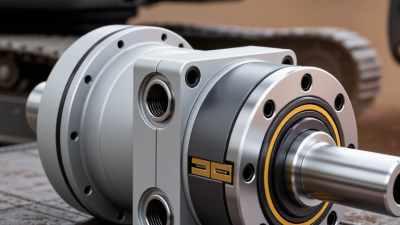
A center joint must transfer hydraulic oil between the upper structure and undercarriage without twisting hoses. For compact and mid-size machinery, 2–5 ports can serve separate travel, steering, or auxiliary circuits. The stated 21–35 MPa range equals 210–350 bar, so pressure rating must match the machine’s actual operating and peak pressures. More circuits are not automatically better.
Flow capacity matters just as much. Undersized passages can raise pressure loss, heat the oil, and slow functions; oversized passages may add cost and bulk.
ISO 4413:2010 addresses hydraulic-system safety, including pressure control and protection against pressure fluctuations. ISO 10771-1:2015 describes fatigue testing for pressure-containing hydraulic components.
These references help buyers ask for evidence, not just a maximum-pressure figure. Ask suppliers for circuit diagrams, rated flow per passage, leakage limits, and pressure-impulse test results. Check seal compatibility with the intended fluid and temperature. Fit matters.
In practice, mounting-face tolerances and port alignment deserve close inspection. A small mismatch can create installation stress or external leakage. A 21–35 MPa label alone does not prove reliable multi-circuit performance; test conditions and duty cycle matter.
Some selection details are easy to overlook. Actual flow demand changes with machine configuration, and published specifications may not capture that variation. A careful supplier should state assumptions clearly and provide traceable test data.
Center joints rely on accurate alignment between rotating and stationary parts. During CNC machining, operators check bore diameter, face flatness, and groove depth against the engineering drawing. A small deviation can distort seal compression or create uneven contact. Cutting tools also need monitoring, since wear may leave rough edges around ports. Small details matter.
Heat treatment can improve a component’s strength and wear resistance, but only when the material and cycle are properly controlled. Parts are heated and cooled according to defined process parameters, then checked for hardness and distortion. Measurements before and after treatment help identify movement that could affect fit. This step is not perfectly predictable; thick sections may respond differently from thin ones. Records should connect each batch with its material and treatment results.
Leak testing checks whether assembled passages and seals hold under specified conditions. A test setup may use air or liquid, with pressure, hold time, and acceptable leakage clearly recorded. Inspectors should verify connections and allow readings to stabilize before judging results. A test can reveal a problem, but it cannot prove performance in every service condition. Calibrated instruments and repeatable procedures make the evidence more useful.
China Best Center Joint Manufacturers and Suppliers
Selecting a center joint supplier requires more than a polished catalog. ISO’s Survey of Management System Standard Certifications 2022 recorded 1,265,216 ISO 9001 certificates worldwide. That figure shows broad adoption, not automatic product excellence. Ask for the current certificate, issuing body, site address, and scope. A certificate covering sales offices may not cover machining or assembly.
OEM capacity must be verified on the factory floor. Review machine lists, working envelopes, monthly output, maintenance records, and backup processes. Request samples made from the same drawings and materials used in production. Useful quality data includes dimensional inspection results, material certificates, traceability codes, nonconformance rates, and corrective-action closure times. NIST guidance on process capability supports using Cp and Cpk to judge process stability, but these values need adequate sampling. One impressive report is not enough.
The best evaluation is practical. Compare ten recent inspection lots, not one perfect sample. Check joint fit, surface finish, hardness, and load-test results against agreed specifications. ISO 9001 controls the management system; it does not certify every center joint. That distinction is often missed. A supplier may also overstate OEM capacity during an audit. I would treat vague answers as data gaps, not proof of failure. Better evidence comes from repeatable records, witnessed testing, and clear responsibility for deviations. Industry data helps, but disciplined verification still matters.
| Evaluation Dimension | Indicator | Evidence to Request | Evaluation Method |
|---|---|---|---|
| Quality management | ISO 9001 certification status and applicable scope | Current certificate showing the legal entity, covered manufacturing site, scope, certification body, and validity dates | Confirm the certificate is current and that its scope covers the relevant manufacturing activities. Verify it with the certification body or an applicable accreditation directory. |
| OEM capability | Ability to manufacture to customer drawings and specifications | Drawing review process, sample approval records, engineering change procedure, and examples of inspection documentation | Check whether drawing revisions, tolerances, material requirements, and approval steps can be documented and controlled. |
| Production capacity | Available capacity for the requested product and order volume | Documented production schedule, relevant equipment list, stated monthly capacity, and current capacity-utilization information | Compare documented capacity and lead time with the buyer’s forecast; confirm assumptions, shift patterns, and any subcontracted processes. |
| Incoming material control | Material identification and verification before production | Material specifications, supplier certificates where applicable, incoming inspection records, and lot-traceability examples | Check that material lots can be linked to inspection records and finished-product batches. |
| In-process inspection | Inspection checkpoints for critical dimensions and processes | Control plan, inspection instructions, measurement equipment list, and completed inspection records | Confirm inspection points match the drawing and that measuring equipment is suitable and maintained or calibrated. |
| Final inspection | Documented acceptance checks before shipment | Final inspection report, sampling plan if used, product identification records, and release procedure | Review whether acceptance criteria are agreed in advance and whether results are traceable to the order or production lot. |
| Quality performance data | Defect rate, nonconformance trends, and corrective-action status | Time-period-based quality reports, defect definitions, nonconformance logs, and corrective-action records | Request the calculation method and reporting period for each metric; compare trends over multiple periods rather than relying on a single figure. |
| First-pass yield | Share of units passing a defined inspection stage without rework | Production or inspection data identifying total units processed and units passing on the first attempt | Calculate as first-pass accepted units divided by total units processed, using a clearly defined process stage and reporting period. |
| Traceability | Ability to link finished goods to production and material records | Sample batch or serial-number records connecting finished products with production dates, inspection results, and material lots | Perform a sample traceability exercise and check that records can be retrieved consistently. |
| Delivery and order control | Production lead-time commitments and delivery performance tracking | Order schedule, lead-time assumptions, shipment records, and on-time delivery calculation method | Compare promised and actual shipment dates across a defined period; confirm how partial shipments and changes are treated. |
| Supplier monitoring | Controls for outsourced processes and supplied components | Approved supplier controls, incoming verification records, and relevant process or material certificates | Identify outsourced steps and check how requirements, changes, and nonconformities are communicated and monitored. |
| Audit and corrective action | System for addressing audit findings and recurring defects | Recent audit summaries, corrective-action records, root-cause documentation, and effectiveness checks | Look for documented responsibilities, completion dates, root-cause analysis, and evidence that corrective actions were checked for effectiveness. |
This is a supplier-evaluation framework, not a ranking of specific manufacturers. Supplier-specific certification, capacity, and quality figures should be verified from current records before sourcing decisions are made.
China Best Center Joint Manufacturers and Suppliers
When purchasing center joints, seal life should be examined before price. Ask suppliers for seal material, operating temperature, pressure range, and contamination resistance. A quality seal may last several years in clean conditions, but dust, water, and misalignment can shorten its service life. Request test records and installation guidance. These details show practical engineering control.
Warranty terms need clear written limits. Check coverage for seals, machining defects, leakage, and premature wear. Some suppliers offer twelve months, while others provide longer protection for specific components. Confirm whether labor, replacement parts, and shipping are included. A vague warranty creates trouble later. I have seen buyers accept broad promises, then discover that seals were excluded.
Tips: Ask for a sample, inspection report, and production photos. Confirm delivery lead time in writing, including manufacturing, testing, packing, and transport. A realistic schedule is better than an attractive promise. Also, evaluate after-sales support. Can the supplier provide troubleshooting videos, spare seals, and technical replies within one business day? Keep communication records. Mistakes happen, even with experienced teams. One overlooked dimension can delay installation. Suppliers that admit limitations often prove more reliable than those claiming perfection.
Typical procurement benchmarks for center joint purchasing: seal service life, warranty coverage, delivery lead time, and after-sales response time.
The benchmark values represent commonly specified purchasing targets rather than any individual company or brand. Longer seal life and warranty coverage are preferable, while shorter delivery and response times indicate faster support.