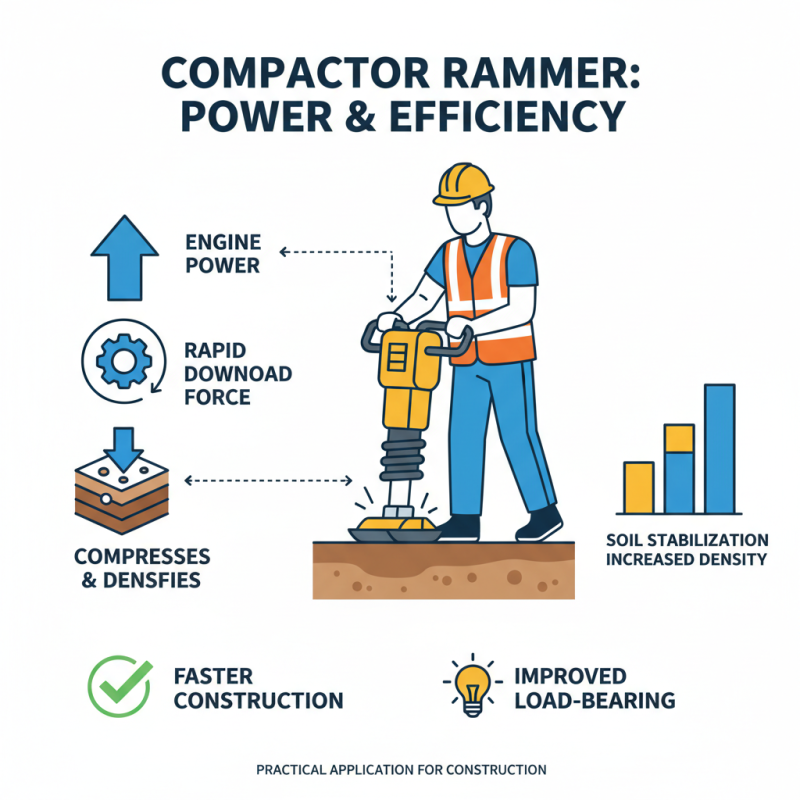
What is a Vibrating Compactor Rammer and How Does it Work?
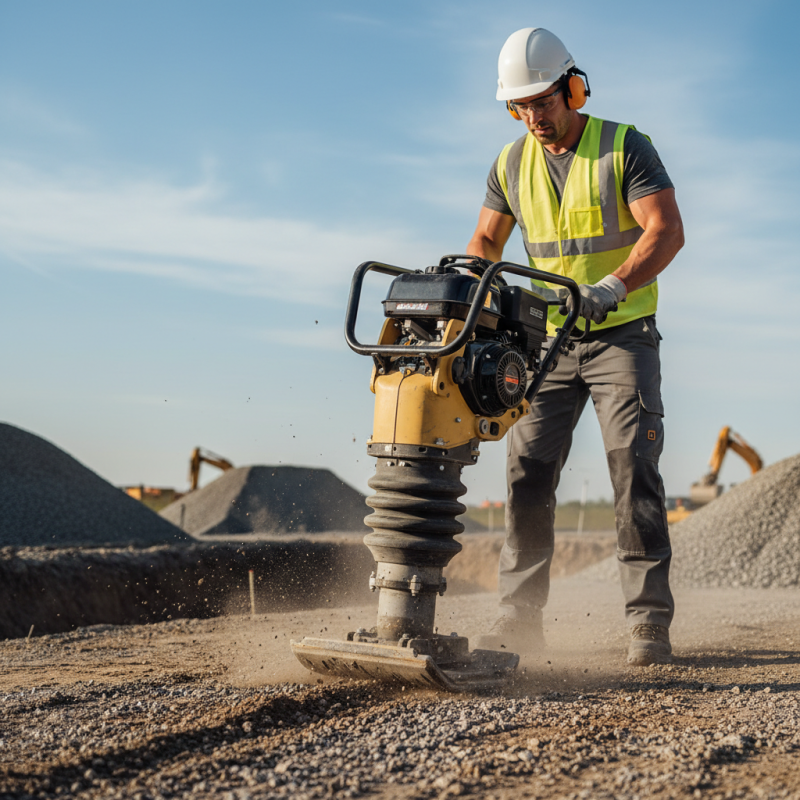
A Vibrating Compactor Rammer is a powerful tool used in construction and landscaping. Its primary function is to compact soil and other materials. This device achieves high-density compaction, essential for creating a stable foundation.
Operating the Vibrating Compactor Rammer involves a simple mechanism. The machine generates vibrations that penetrate the ground. This action displaces air and reduces the voids in the soil. Ground conditions can dictate its effectiveness.
It’s important to note that using this tool is not without challenges. Inexperienced operators may struggle with control. There can be inconsistencies in the compaction if not used correctly. Regular maintenance is essential to avoid performance issues.
What is a Vibrating Compactor Rammer?
A vibrating compactor rammer is a powerful tool used in construction. It helps to compact soil and other materials effectively. This tool creates vibrations, which enhance the density of the ground. By doing this, it prepares the ground for building foundations, roads, and other structures.
Using a rammer requires some skill. Operators must carefully control the process. Too much force can damage the soil or create uneven surfaces. It's essential to maintain a steady hand and an eye on the ground condition.
Tips: Ensure the area is clear of debris before starting. A clean workspace allows for better compaction. Additionally, occasionally check the equipment. Regular maintenance extends the rammer's life and maintains efficiency.
Vibrating compactors come in various sizes. Each type serves different projects. Consider your project's needs when selecting a rammer. It's crucial to balance power and maneuverability. A mismatch may lead to frustration and inefficiency.
Vibrating Compactor Rammer Performance Analysis
This bar chart illustrates the key performance metrics for a Vibrating Compactor Rammer, including soil density, vibration frequency, impact force, and operating weight. These parameters are crucial for understanding the effectiveness and efficiency of the machinery in compaction tasks.
Key Components of a Vibrating Compactor Rammer
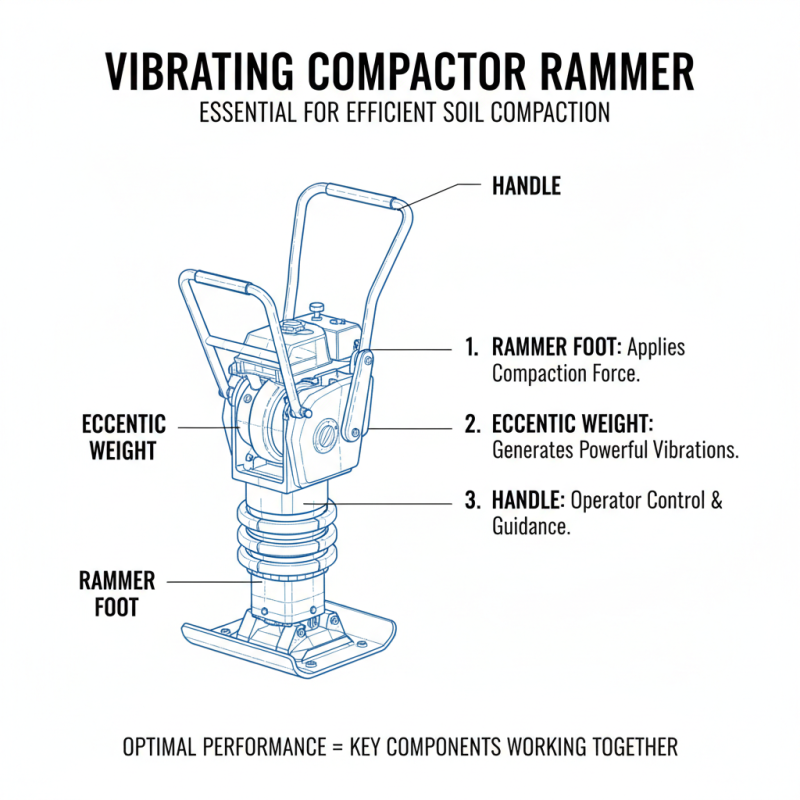
A vibrating compactor rammer is essential for efficient soil compaction. Its primary components include the rammer foot, eccentric weight, and handle. Each part plays a significant role in the machine’s performance.
The rammer foot is crucial for distributing impact forces evenly. This helps achieve consistent compaction. Typically, the weight of the rammer foot varies between 10 to 30 kilograms, providing adequate force for different soil types. The eccentric weight generates vibrations. This vibration frequency usually ranges from 10 to 15 Hz. Reports indicate that improved compaction can raise soil density by up to 30%, enhancing structural integrity.
Operator comfort is also vital. The handle design allows ergonomic control. Operators can adjust it for different heights, promoting better usability. However, vibrations can lead to operator fatigue. Research shows that prolonged use without proper handling can affect productivity. Regular maintenance is essential to ensure optimal performance. Neglecting this may result in decreased efficiency and increased downtime. Each component must work in harmony for the rammer to function effectively.
Applications of Vibrating Compactor Rammers in Construction
Vibrating compactor rammers play a critical role in construction. They are essential for compacting soil, asphalt, and other materials. With proper use, these machines improve ground stability. For example, in road construction, proper soil compaction can enhance long-term durability. A well-compacted foundation can increase the lifespan of pavements by as much as 40%.
In urban projects, vibrating rammers help ensure compliance with safety and load-bearing requirements. This equipment can reach tight spots that larger machines cannot access. However, operators must be cautious. Over-compaction can lead to soil displacement. This mistake can create weak points in a foundation. According to industry reports, about 15% of foundation failures are linked to improper compaction methods.
Construction workers equipped with rammers can also meet tight deadlines more effectively. Each cycle of compaction takes only a few seconds. This efficiency is vital in maintaining project schedules. Yet, noise pollution is a growing concern in densely populated areas. Regulations are becoming stricter. Balancing efficiency, compliance, and community impact is a persistent challenge.
Safety Guidelines for Operating a Vibrating Compactor Rammer
Operating a vibrating compactor rammer requires careful adherence to safety guidelines. This machinery is vital for compacting soil and asphalt. According to industry reports, improper use can lead to severe injuries. Always wear appropriate personal protective equipment. This includes safety goggles, gloves, and sturdy footwear. Ensure the work area is clear of obstacles and well-ventilated.
Before starting the rammer, check for mechanical issues. Loose parts can lead to accidents. The vibrations can be intense, contributing to employee fatigue. Regular breaks are necessary to maintain focus and efficiency. Training sessions can improve understanding of safe operating procedures. More than 30% of accidents occur due to operator error, highlighting the need for constant vigilance.
Operators must be aware of their limits. If feeling fatigued, it’s safer to pause. Noise levels can also be dangerously high. Hearing protection is essential. Monitoring the environment for hazards should be routine. These preventive measures help reduce risks associated with equipment operation. Lifesaving precautions count in every work environment.

 +86 13794985240
 CONTACT NUMBER
 CONTACT NUMBER