 +86 18578756148
Leave Your Message
-
CONTACT NUMBER
-
 CONTACT NUMBER
 -
 CONTACT NUMBER
 -
 CONTACT NUMBER
-
 CONTACT NUMBER
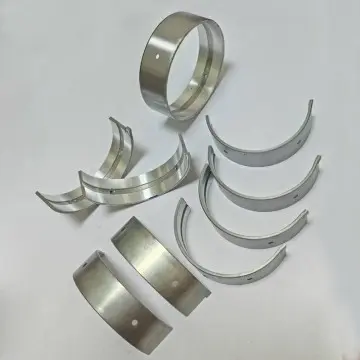
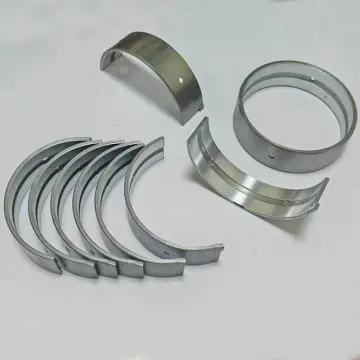
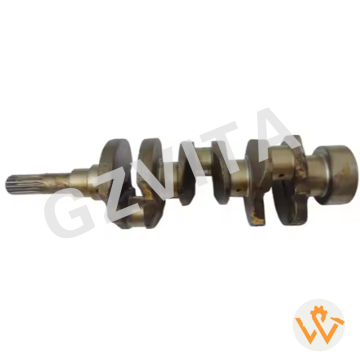
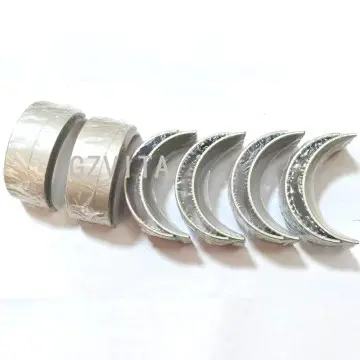
In the vast and unforgiving environment of the open ocean, the reliability of a marine vessel is entirely dependent on the integrity of its propulsion system. At the very core of this system lies the marine engine, a colossal piece of engineering that converts thermal energy into the immense mechanical power required to move thousands of tons of steel through water. Within this complex mechanical heart, the Crankshaft Bearing for Marine Engine Support plays an indispensable role. These bearings are precision-engineered components designed to hold the crankshaft in place while allowing it to rotate with minimal friction under extreme combustion pressures.
Unlike standard automotive bearings, marine engine crankshaft bearings must endure relentless continuous operation, often running for weeks or months without a shutdown. They operate on the principle of hydrodynamic lubrication, where a microscopic film of oil separates the bearing shell from the rotating crankshaft journal. If this oil film breaks down due to inferior bearing materials, improper clearance, or extreme stress, the resulting metal-to-metal contact can lead to catastrophic engine failure. Therefore, the metallurgical composition, geometric precision, and fatigue resistance of these bearings are paramount to maritime safety and operational efficiency.
The global maritime industry is the backbone of international trade, responsible for transporting over 90% of the world's goods. Consequently, the industrial demand for robust Crankshaft Bearing for Marine Engine Support solutions has surged. The market is currently experiencing a significant transformation driven by stringent international emissions regulations (such as IMO 2020 and upcoming carbon-neutral mandates) and the pursuit of higher engine efficiency. To meet these new standards, marine engines are being designed to operate at higher peak firing pressures, which in turn places unprecedented loads on main and connecting rod bearings.
Commercially, the supply chain for marine engine parts is divided into Original Equipment Manufacturers (OEM) and the high-quality aftermarket sector. Given that downtime for a commercial cargo ship can cost tens of thousands of dollars per day, shipowners and marine engineers are increasingly turning to advanced aftermarket manufacturers who can provide exceptionally durable bearings with rapid global delivery. The current industrial landscape emphasizes bimetallic and trimetallic bearing structures, utilizing steel backings fused with advanced copper-lead or aluminum-tin alloys, often enhanced with specialized polymer or electroplated overlays to ensure maximum embeddability and conformability.
Engineered to withstand extreme peak firing pressures in modern multi-stroke marine diesel engines.
Advanced alloy compositions resist acidic degradation caused by low-grade heavy fuel oils (HFO).
Optimized hydrodynamic profiles reduce wear, extending the Mean Time Between Overhauls (MTBO).
The application of a Crankshaft Bearing for Marine Engine Support is not a one-size-fits-all scenario. Different types of vessels subject their engines to vastly different operational profiles, requiring highly specialized bearing technologies tailored to specific maritime applications.
For massive container ships and bulk carriers, the primary propulsion comes from slow-speed, two-stroke crosshead diesel engines. These engines operate at remarkably low RPMs (often between 60 to 120 RPM) but generate colossal torque. In these applications, the crankshaft bearings are massive, thick-walled components. The primary challenge here is maintaining the hydrodynamic oil film at such low rotational speeds. The bearings used in these marine supports must possess exceptional anti-seizure properties and a high degree of conformability to accommodate the micro-flexing of the massive crankshaft over its length during heavy ocean swells.
Vessels operating in the offshore energy sector, such as OSVs and heavy-duty tugboats, typically utilize medium-to-high-speed four-stroke engines. Unlike cargo ships that maintain a steady speed for days, these vessels constantly alter their thrust and heading using Dynamic Positioning (DP) systems. This results in frequent RPM fluctuations, rapid acceleration, and sudden load changes. The crankshaft bearings in these marine engines must endure severe cyclic loading. High-strength sputter bearings—where the running layer is applied via physical vapor deposition (PVD) in a vacuum—are often employed here to prevent fatigue cracking under dynamic stress.
Naval ships and coast guard patrol vessels demand uncompromising performance. Their engines must be capable of rapid cold starts and transitioning from idle to maximum pursuit speed in minutes. The crankshaft bearings supporting these marine engines are subjected to extreme thermal shocks and marginal lubrication conditions during rapid acceleration. Modern solutions involve bearings with advanced polymer-based running layers (such as Polyamide-imide mixed with solid lubricants like MoS2 or PTFE). These "smart coatings" provide dry-running survivability, ensuring the engine does not seize even if the oil pressure momentarily drops during aggressive combat maneuvers.
The future of the Crankshaft Bearing for Marine Engine Support is being shaped by the integration of Artificial Intelligence (AI), the Internet of Things (IoT), and advanced nanotechnology. As the maritime industry moves towards autonomous shipping and digitalization, engine components must evolve from passive mechanical parts into active nodes within a vessel's sensor network.
AI-Driven Manufacturing: In the production phase, AI and machine learning algorithms are revolutionizing quality control. Automated optical inspection systems powered by AI can detect microscopic casting flaws, dimensional deviations, or coating inconsistencies in bearing shells that human eyes would miss. This ensures a zero-defect tolerance, which is critical for marine engine supports where failure is not an option. Furthermore, AI optimizes the electroplating and sputtering processes in real-time, ensuring exact atomic-level thickness of the bearing overlays.
Predictive Maintenance and Sensor Integration: The most groundbreaking trend is the development of "smart bearings." Future marine crankshaft bearings are being designed with embedded micro-sensors capable of measuring temperature, oil film thickness, and acoustic emissions (vibration) directly at the journal interface. This data is fed into onboard AI diagnostic systems that predict bearing wear before it reaches a critical state. Instead of relying on rigid, time-based maintenance schedules, ship operators can transition to condition-based maintenance, drastically reducing unnecessary overhauls and preventing unexpected breakdowns at sea.
Eco-Friendly Metallurgy: Environmental regulations are also driving metallurgical trends. Traditional marine bearings relied heavily on lead-based overlays for their excellent sliding properties. However, due to environmental toxicity concerns, the industry is rapidly transitioning to lead-free aluminum alloys and advanced resin-based coatings. These next-generation materials not only comply with global environmental standards but also offer superior wear resistance against the abrasive soot particles often found in marine engine oil.
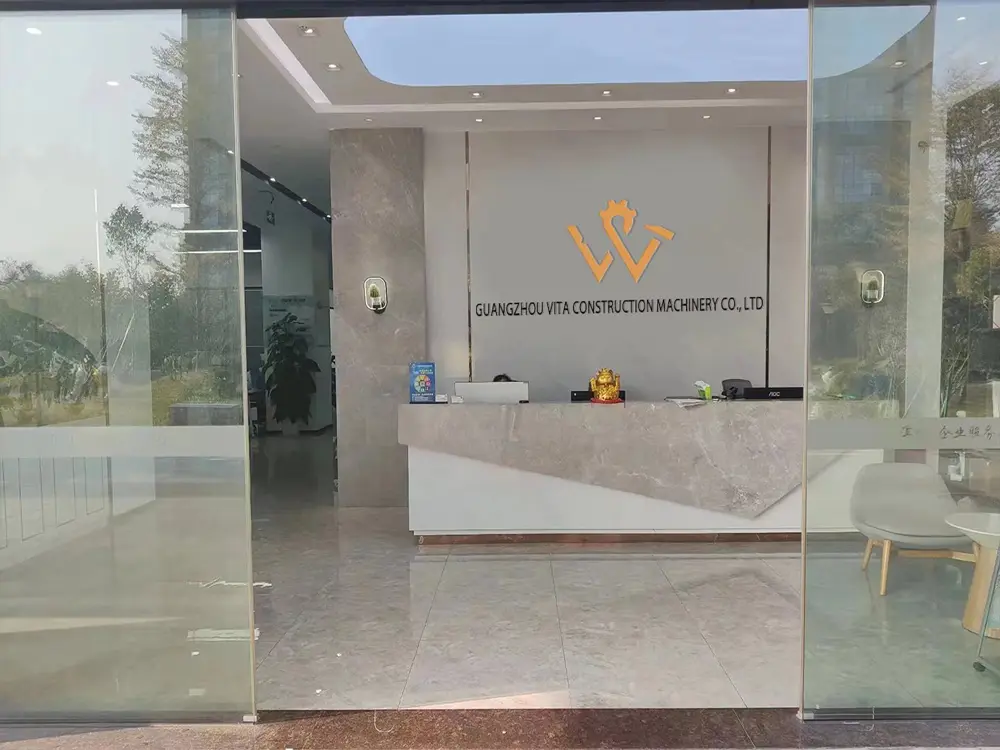
In the fast-paced world of construction and maritime operations, the reliability and efficiency of your machinery can make or break a project. We understand that high-quality parts are essential for optimal performance. So we aim to provide top-notch machinery parts to make customer's machinery running smoothly.
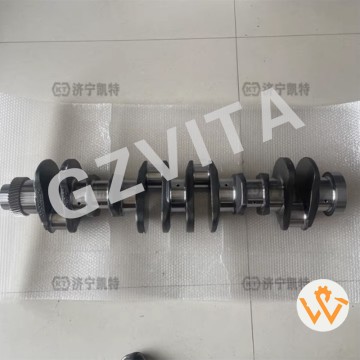
To improve our service, we set up engine maintenance development. In addition to providing customers with engine assemblies and crankshaft bearings, we can also help customers solve various technical problems encountered in the operation and assembly of engines.
We have our own professional maintenance team and can even be invited by customers to arrange for maintenance technicians to go abroad to help customers repair heavy-duty and marine engines on-site.