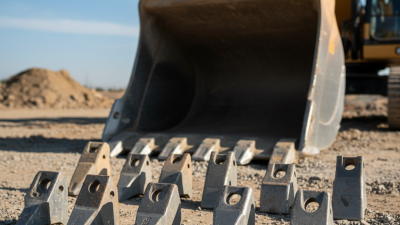
| Sharp Penetration Tooth |
Reduce the initial digging force by concentrating contact pressure at a narrow, pointed tip. |
High |
Low to Medium |
Low to Medium |
Compact soil, clay, loam, weathered ground, and moderately cohesive materials. |
Trenching, utility work, general excavation, and digging where bucket entry is the main challenge. |
Enters compact ground easily; can improve digging efficiency when breakout force is limited. |
The narrow tip can wear faster in abrasive soil, rock, recycled concrete, or gravel. |
| General-Purpose Tooth |
Provide a balanced combination of penetration, wear life, and payload retention. |
Medium to High |
Medium |
Medium |
Mixed soils, sand, clay, gravel, and routine construction materials. |
General excavation, loading, site preparation, and mixed-duty earthmoving. |
Versatile choice for changing ground conditions and a broad range of daily tasks. |
Usually does not outperform specialized profiles in extremely hard, abrasive, or high-volume work. |
| Heavy-Duty Abrasion Tooth |
Maximize wear material around the tip and leading edges for longer service life. |
Low to Medium |
High |
Medium |
Crushed rock, sandstone, granite fragments, compact gravel, slag, and highly abrasive soils. |
Quarry loading, rock handling, mining-related earthmoving, and abrasive aggregate excavation. |
Retains its working shape longer under sliding contact with abrasive materials. |
More metal at the nose can increase penetration resistance and may require greater breakout force. |
| Rock Penetration Tooth |
Combine a reinforced point with a robust body for hard, fractured, or partially cemented ground. |
Medium |
High |
Low to Medium |
Fractured rock, hardpan, cemented gravel, caliche, and other difficult compacted formations. |
Rock excavation, trenching in hard formations, foundation work, and heavy-duty digging. |
Strong tip support and improved resistance to edge breakage compared with light-duty pointed teeth. |
Can be less efficient than a narrow penetration tooth in soft or easily dug soil. |
| Wide Capacity Tooth |
Increase the working width and help retain loose material during loading and lifting. |
Low |
Medium |
High |
Loose soil, sand, topsoil, coal-like bulk materials, mulch, and other free-flowing materials. |
Stockpile loading, material handling, landscaping, grading support, and truck loading. |
Supports efficient bucket filling and can help reduce material loss during transport. |
The wider cutting area can increase resistance in compact ground and may not penetrate hard layers effectively. |
| Twin-Point or Twin-Tip Tooth |
Divide the digging edge into multiple points to improve initial entry and maintain cutting contact. |
High |
Medium |
Low to Medium |
Compact clay, dense soil, frozen ground, and materials requiring repeated entry points. |
Trenching, frost-affected excavation, utility installation, and narrow digging operations. |
Provides multiple penetration points and can help break up cohesive material. |
Individual points may be smaller and can wear or fracture sooner in severe rock or abrasive service. |
| Tiger or Reinforced Rock Tooth |
Deliver high tip strength and concentrated digging force for severe-duty ground engagement. |
Medium |
High |
Low to Medium |
Hard rock, blasted material, reinforced concrete fragments, and severe quarry conditions. |
Quarrying, demolition cleanup, heavy rock excavation, and demanding production digging. |
Robust geometry helps resist tip damage and maintains digging capability in severe service. |
Typically heavier and less suitable for light machines, soft soils, or applications where maximum bucket fill is the priority. |
| Flush or Blunt Loading Tooth |
Provide a broad working edge for loading and handling rather than deep penetration. |
Low |
Medium |
High |
Loose aggregate, sand, topsoil, snow-like bulk materials, and cleaned stockpiles. |
Loading trucks, stockpile management, cleanup, grading, and high-volume bulk handling. |
Promotes a smooth bucket profile and efficient retention of loose material. |
Not recommended for hard excavation, prying, rock penetration, or heavily compacted soil. |

 +86 18578756148