Top 10 Frame Support Bracket Manufacturers for Global Buyers
Frame Support Bracket manufacturing rarely receives a separate category in public market research. It is usually grouped within automotive chassis, structural components, or lightweight materials. That limitation matters. Buyers need more than a supplier’s production volume.
The Aluminum Association’s automotive roadmap projects rising aluminum content in North American vehicles through 2030. The World Steel Association also highlights advanced high-strength steel for safer, lighter vehicle structures. These findings point to a practical challenge: brackets must reduce weight while surviving vibration, corrosion, and repeated loads. Small parts still carry serious responsibility.
Professor Michael F. Ashby, a leading materials-selection authority, wrote, “Materials selection is a process of elimination.” His principle fits every Frame Support Bracket sourcing decision. Material grade, forming method, coating, tolerance, and testing cannot be separated. A low quotation may hide weak validation or inconsistent batches.
This guide reviews ten manufacturers serving global buyers. It considers engineering capability, tooling experience, quality systems, export readiness, and application coverage. Public information from supplier disclosures, automotive industry reports, and certification records supports the comparison. Yet no ranking is perfect. A supplier may appear strong on paper and struggle with a complex production launch.
Look closely. Ask for fatigue data, dimensional reports, coating specifications, and sample traceability. Confirm whether the quoted bracket matches your vehicle platform and mounting environment. Regional capacity also affects lead time and risk. The best choice is rarely the cheapest component. It is the supplier that delivers repeatable strength, stable geometry, and honest technical communication.
What Frame Support Brackets Are and Where They Are Used
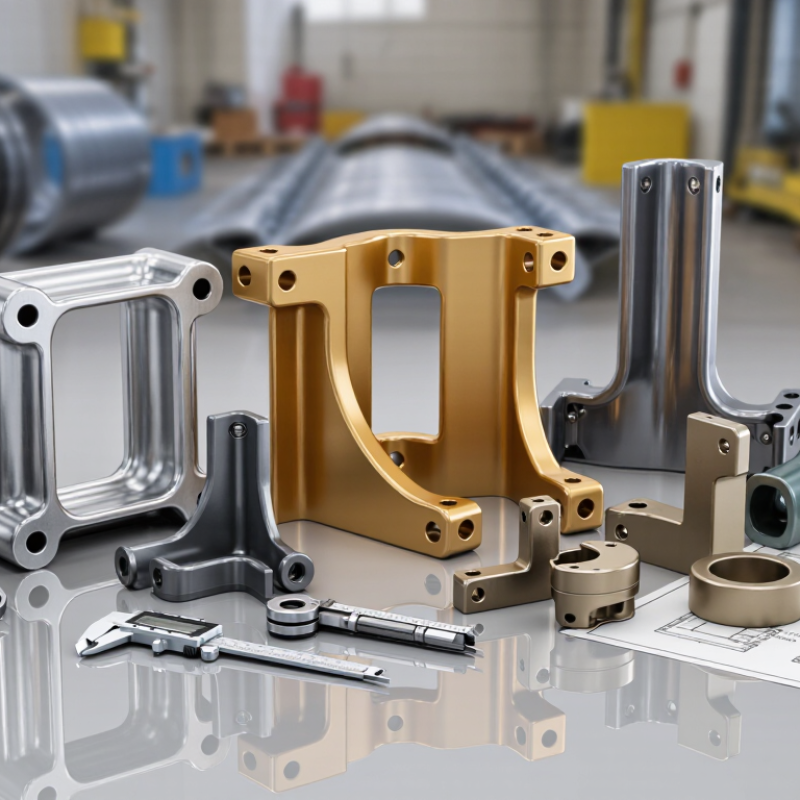
Frame support brackets are hardware components that connect, reinforce, or position structural frame members. They are commonly made from steel, stainless steel, or aluminum. Their shape depends on the load, joint angle, and installation environment.
These brackets appear in machinery frames, vehicle bodies, solar mounting structures, warehouse equipment, and modular buildings. A welded corner bracket may strengthen a fixed joint. An adjustable bracket can align rails during installation. In outdoor systems, coatings help resist moisture, salt, and temperature changes. However, coating alone does not solve poor drainage or incorrect fastener selection.
Tips:
Check the bracket’s load rating, hole pattern, material thickness, and corrosion protection. Measure the frame before ordering. A small mismatch can create stress, vibration, or uneven contact. Use compatible bolts and washers, then inspect the joint after initial operation. Do not assume a heavier bracket is always safer; weight, fit, and load direction matter. In practice, designers sometimes overlook access for tools. That detail can delay installation and deserves early review.
Key Features to Compare in Global Bracket Manufacturers
When comparing frame support bracket manufacturers, examine engineering evidence before reviewing price. A capable supplier should provide material grades, load ratings, dimensional tolerances, and clear production drawings. These details reveal whether the bracket fits real assemblies, not just a catalog image. Ask how the design handles vibration, repeated loading, and uneven installation surfaces.
Manufacturing control matters equally.
Check whether the factory uses incoming material inspection, fixture-based welding, torque checks, and final dimensional testing. Request sample reports with measured values, not only statements such as “high quality.” A practical sample should show clean welds, consistent hole spacing, smooth edges, and coating coverage around corners. Small defects often become larger problems during installation. They are easy to miss.
Reliability also depends on traceability and communication.
Compare batch identification, inspection records, packaging methods, and response times for technical questions. A professional manufacturer can explain its testing limits without making unrealistic claims. Independent testing may be valuable for demanding applications, especially where corrosion resistance or structural fatigue matters. Certifications can support credibility, but they should match the actual product and current production site. A polished certificate is not proof by itself. Review it carefully. Lead time deserves attention too. Some suppliers promise fast delivery, then struggle with tooling changes or replacement parts. A written production schedule, sample approval process, and corrective-action procedure create better control. Even experienced buyers can overlook packaging damage, so inspect the first shipment closely.
How the Top 10 Frame Support Bracket Manufacturers Differ
The top ten frame support bracket manufacturers do not compete on price alone. They differ in material control, tooling depth, and field performance. Some specialize in stamped steel for high-volume platforms. Others machine aluminum or weld reinforced assemblies for demanding loads. A capable supplier explains yield strength, coating thickness, and tolerance limits clearly. That matters when a bracket faces vibration, road salt, and repeated impact. Samples should match production methods, not hand-finished prototypes. Good advice is practical.
Their quality systems also separate them. Strong manufacturers use incoming inspection, fixture checks, torque records, and batch traceability. They provide dimensional reports and test data without delaying every answer. Mature teams discuss failure modes before quoting. They may recommend a radius change, drainage hole, or thicker gusset. These details can prevent noise and fatigue cracks. However, certificates alone prove little. In supplier audits, I have seen compliant paperwork hide weak communication and late corrective action.
Commercial differences matter for global purchasing. Compare tooling ownership, minimum order quantities, packaging, lead times, and spare-part support. Ask how engineering changes are approved and recorded. Response speed matters during a line stoppage. So does honest escalation. The strongest manufacturers admit limits and suggest safer alternatives. No supplier is perfect. I would request a pilot batch, salt-spray evidence, load testing, and a production-control audit. A factory visit can reveal loose gauges, mixed labels, or excellent discipline. Those observations often matter more than polished presentations.
Manufacturing Standards, Materials, and Quality Control
Top 10 Frame Support Bracket Manufacturers for Global Buyers
Manufacturing Standards, Materials, and Quality Control
Reliable frame support brackets begin with controlled material selection. Carbon steel suits high-load structures and cost-sensitive projects. Stainless steel resists corrosion in humid or chemical environments. Aluminum reduces weight but needs careful fatigue assessment. Buyers should request mill certificates, heat numbers, and coating records for every production batch.
ISO 9001 remains a useful baseline for supplier evaluation. The ISO Survey 2023 reported more than 1.2 million valid ISO 9001 certificates worldwide. However, certification alone proves limited capability. Strong manufacturers also use calibrated gauges, coordinate measuring machines, and documented process controls. Automotive applications may require IATF 16949 practices, including traceability, failure analysis, and production-part approval records. Salt-spray testing should follow ASTM B117 when protective coatings are specified. Welded brackets need visual inspection and, where risk demands it, non-destructive testing.
Tips: Ask for recent inspection reports, not sample templates. Confirm tolerances, coating thickness, load direction, and packaging conditions. A small dimensional error can create frame misalignment. No system is perfect. Even capable factories can miss burrs, warped holes, or inconsistent coating edges. Buyers should review corrective-action records and repeat inspections during early shipments. The best supplier is not merely certified. It measures what matters and admits where control still needs improvement.
Top 10 Frame Support Bracket Manufacturers for Global Buyers
Manufacturing Standards, Materials, and Quality Control
How to read this chart: The comparison shows representative minimum tensile-strength values for materials commonly used in frame support brackets. Values are based on widely used ASTM and EN material specifications. Final supplier evaluation should also verify ISO 9001 quality systems, IATF 16949 capability where applicable, material certificates, weld quality, dimensional inspection, corrosion testing, and PPAP documentation.
Carbon Steel
ASTM A36: 400 MPa minimum tensile strength
HSLA Steel
ASTM A572 Grade 50: 450 MPa minimum tensile strength
Stainless Steel
304 stainless: approximately 515 MPa minimum tensile strength
Aluminum
6061-T6: approximately 310 MPa minimum tensile strength
How Global Buyers Can Select the Right Supplier
Global buyers should assess frame support bracket suppliers as engineering partners, not low-cost vendors. Start with material control, forming accuracy, weld integrity, and documented traceability. The 2024 World Steel Association review reported 1.88 billion tonnes of crude steel production worldwide. That scale supports supply continuity, but it does not prove consistent bracket quality. Request heat certificates, incoming inspection records, and samples from routine production lots. Small details matter.
A reliable supplier should show IATF 16949-based controls, calibrated gauges, capability studies, and corrective-action records. Ask for Cpk results on hole position, flange angle, and coating thickness. Set acceptance limits before quotation. The AIAG Production Part Approval Process remains a practical reference for design changes and launch control.
For international purchasing, compare packaging tests, export documents, lead-time variance, and backup tooling plans. The World Bank’s 2023 Logistics Performance Index evaluates customs, infrastructure, and shipment timeliness as core logistics dimensions. Still, supplier promises can be optimistic.
I would audit a factory line, not only a presentation room. Watch operators load fixtures, verify torque, and segregate nonconforming parts. Run a pilot order across different production days. Then inspect burrs, distortion, weld spatter, corrosion resistance, and assembly fit.
Total Cost
Tooling, freight, inspection, rework, and disruption risk should all be included.
Supplier Resilience
Keep one qualified alternative where brackets support safety-related structures.
A cheaper quote may age badly. Keep one qualified alternative where brackets support safety-related structures. Maybe this is inconvenient. But resilience is measured through evidence, not confident language.

 +86 18578756148
 CONTACT NUMBER
 CONTACT NUMBER
 CONTACT NUMBER

 CONTACT NUMBER