+86 18578756148


Choosing the right Vibrating Compactor Rammer requires more than comparing prices or engine power. Soil type, working depth, vibration frequency, operator comfort, and after-sales support all influence field results. On a narrow trench, one extra pass can affect productivity and fuel use. On granular soil, poor moisture control may leave the surface looking firm while deeper layers remain loose.
Dr. David J. White, a respected geotechnical and intelligent-compaction researcher, offers a useful principle: “Compaction quality depends on matching machine energy to soil behavior.” This simple statement matters when evaluating manufacturers in China. A reliable factory should explain how its rammer performs on clay, sand, gravel, and mixed backfill. It should also provide measurable specifications, not only attractive photographs.
This guide examines China’s top ten Vibrating Compactor Rammer manufacturers through practical criteria. These include manufacturing experience, component quality, vibration stability, maintenance access, testing procedures, export service, and user feedback. A strong rammer should start smoothly, maintain steady impact, and remain manageable beside walls or utility lines.
The ranking is not perfect. Market data changes, and smaller manufacturers may deserve more attention than available information shows. Some companies advertise impressive force ratings, yet offer limited evidence from real job sites. That gap deserves careful thought. Buyers should verify certificates, spare-parts availability, warranty terms, and independent performance claims before ordering.
The following overview is designed for contractors, equipment distributors, rental companies, and infrastructure teams seeking dependable compaction equipment. It focuses on practical value rather than marketing language. Performance in the field is what counts.
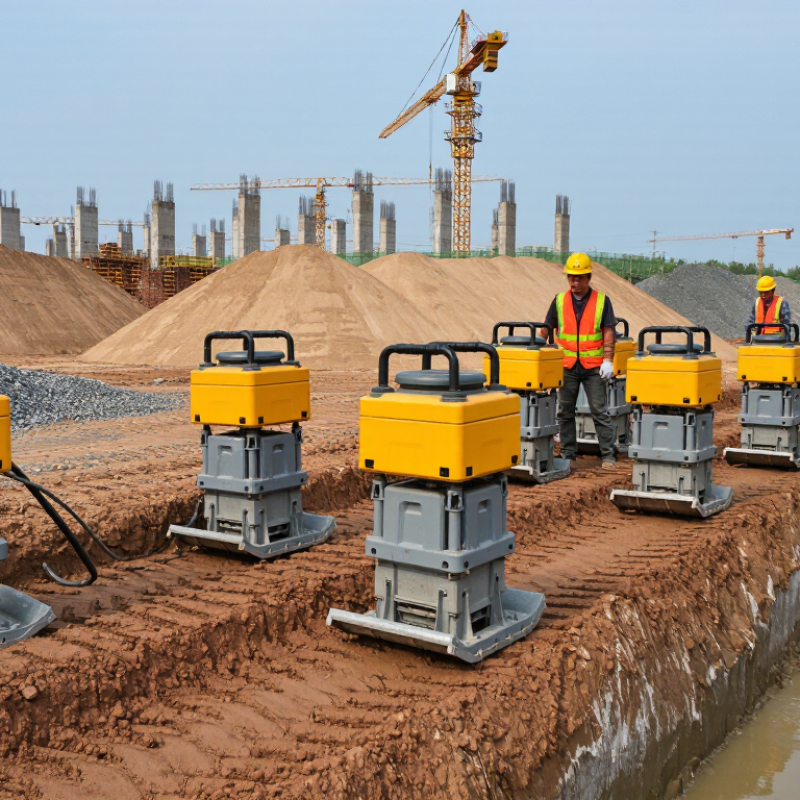
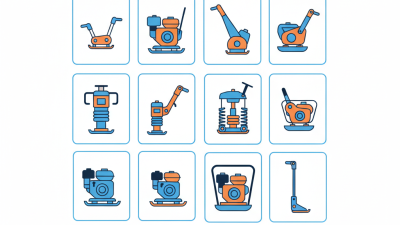
A vibrating compactor rammer is a walk-behind machine designed to densify soil through repeated vertical impacts.
Its engine drives a spring-loaded mechanism beneath a narrow steel foot. The foot strikes the ground rapidly, reducing air pockets between soil particles. This action creates a firmer and more stable working surface.
Rammers perform well in trenches, utility repairs, confined foundations, and narrow paths. Their focused impact suits cohesive soils, especially clay and mixed backfill.
Operators usually compact thin layers, often around 100 to 150 millimeters. Moisture matters. Soil that is too dry resists compaction, while saturated soil may deform under the foot.
Good results depend on more than impact force.
The operator must control travel speed, layer thickness, and repeated passes. Proper boots, gloves, hearing protection, and eye protection remain essential.
A machine can look powerful but still produce uneven density. I have found that rushed passes often leave soft pockets near edges. Field testing should confirm performance, rather than relying only on appearance.
Maintenance also affects reliability; worn springs, loose fasteners, or a damaged foot can reduce impact consistency. Manufacturers in China’s top ten segment increasingly focus on balanced handles, lower vibration transfer, and easier servicing, but practical jobsite verification is still necessary.
When evaluating China’s top vibrating compactor rammer manufacturers, performance data should come before marketing claims. A reliable rammer needs stable centrifugal force, suitable vibration frequency, and consistent amplitude. These figures should match the machine’s working weight and plate size. Ask for test records from real production units. Numbers without test conditions are difficult to trust.
Engine quality matters during long compaction cycles. Check fuel use, cooling performance, starting behavior, and access to replacement filters. Inspect the frame, welds, belt guard, and lifting handle closely. Small cracks around the handle can reveal weak fabrication. Operator comfort also deserves attention. Excessive hand-arm vibration may reduce productivity and increase fatigue. Better designs use balanced components and practical damping systems. Look for details like a water tank, transport wheels, and an adjustable guide handle.
Quality control separates a dependable manufacturer from a low-cost assembler. Request material specifications, inspection procedures, serial-number tracking, and documented load tests. Ask how rejected parts are handled. A serious factory should explain its process clearly. It should also provide manuals, spare-parts support, and responsive technical communication. Certifications can help, but they do not replace physical inspection. No evaluation is perfect. I would still inspect a sample machine before placing a large order. A polished catalog cannot show every weakness. Reliable evidence comes from repeatable testing, transparent records, and machines that perform steadily on compacted soil.
| No. | Evaluation Dimension | Key Specification or Requirement | Recommended Screening Benchmark | Verification Method |
|---|---|---|---|---|
| 1 | Compaction Performance | Impact force, compaction depth, and working efficiency | Documented field or laboratory test results for soil, sand, gravel, and asphalt applications | Review test reports, sample-unit trials, and before-and-after density measurements |
| 2 | Operating Mass and Balance | Machine weight, center of gravity, and maneuverability | Common single-drum rammers typically fall within approximately 55–85 kg, depending on configuration | Check the technical datasheet, shipping weight, operating weight, and handling demonstration |
| 3 | Engine and Powertrain | Engine type, rated power, fuel consumption, and starting reliability | Stable power output under load, easy starting, and clearly identified engine specifications | Inspect engine documentation, conduct cold-start and hot-start tests, and compare fuel-use records |
| 4 | Vibration System | Vibration frequency, centrifugal force, exciter durability, and lubrication design | Consistent vibration output with sealed or properly protected exciter components | Review component drawings, maintenance procedures, endurance-test records, and vibration measurements |
| 5 | Hand-Arm Vibration Control | Handle isolation, measured vibration exposure, and operator comfort | Published vibration-emission data and an ergonomically isolated handle design | Request measurement conditions, test standards, and an operator trial under normal working conditions |
| 6 | Structural and Component Quality | Base plate strength, bellows protection, frame quality, and fastener security | Durable welded or cast components with protected moving parts and accessible service points | Perform visual inspection, dimensional checks, weld inspection, and continuous-operation testing |
| 7 | Safety and Compliance | Guarding, emergency controls, noise, emissions, and market-specific conformity | Complete technical file and applicable conformity documents for the intended destination market | Verify declarations, test reports, labels, manuals, and applicable local regulatory requirements |
| 8 | Manufacturing and Quality Control | Incoming inspection, assembly control, calibration, and final testing | Documented inspection procedures, traceable quality records, and repeatable final testing | Audit production facilities, review inspection plans, and request batch-level quality records |
| 9 | Spare Parts and After-Sales Support | Parts availability, service documentation, warranty terms, and technical response | Exploded parts lists, service manuals, defined warranty coverage, and a clear replacement-parts process | Check sample response times, parts quotations, warranty conditions, and service-case references |
| 10 | Total Cost and Delivery Capability | Unit price, tooling, packaging, lead time, minimum order quantity, and lifecycle cost | Transparent quotation with confirmed production capacity, export packaging, and delivery schedule | Compare total landed cost, inspect packaging, verify production planning, and review delivery history |
China’s Top 10 Vibrating Compactor Rammer Manufacturers reflect the country’s expanding role in compact construction equipment. Grand View Research valued the global construction equipment market at approximately US$232.9 billion in 2023. It also forecasts continued growth through 2030, supported by urban development and infrastructure renewal. These trends create demand for compact rammers on narrow trenches, road shoulders, and foundation edges.
A credible top-ten evaluation should examine more than factory volume. Buyers should compare centrifugal force, impact frequency, operating weight, fuel use, and service response. A typical professional rammer may weigh 60–85 kilograms and deliver impact frequencies above 600 blows per minute. Those figures matter when compacting granular soil around utility lines. Production consistency matters too. ISO 9001 certification, vibration testing, spare-parts availability, and documented noise measurements provide stronger evidence than promotional claims.
The Off-Highway Research outlook identifies China as a major construction equipment production and consumption base, but supplier information is not always equally transparent. That is the difficult part. Some performance figures are self-reported. A careful buyer should request test records, warranty terms, and recent export references before ranking a manufacturer highly. Field experience also exposes weaknesses quickly: a rammer that starts easily in a showroom may struggle after hours of dusty trench work. Price remains important, but poor handle isolation or unstable plate movement can increase fatigue and reduce productivity. The final list should therefore reward verified reliability, not simply the lowest quotation.
Selecting a reliable vibrating rammer manufacturer in China requires more than comparing catalog prices. Grand View Research estimated the global construction equipment market at over USD 240 billion in 2023. This scale attracts capable factories and inexperienced traders. Verify the actual production site, not only the export office.
Ask for measurable test records. A dependable factory should provide rammer weight, impact force, jumping frequency, plate dimensions, fuel consumption, and vibration values. Request videos showing operation on compacted soil, narrow trenches, and uneven surfaces. The European Commission’s machinery safety guidance emphasizes risk reduction, guarding, noise control, and clear operating instructions. These details matter on real construction sites.
Check quality systems, traceability, and after-sales response. ISO 9001 certification is useful, but it proves little without batch records and corrective-action reports. Ask how the factory handles a cracked shoe, loose handle, or difficult cold starting. Those failures are ordinary, not theoretical. A 2024 MarketsandMarkets report identified infrastructure investment as a major driver of construction equipment demand, yet market growth does not guarantee consistent workmanship. Inspect welding points, engine mounting, belt protection, and spare-parts availability before signing. An independent pre-shipment inspection is worth considering. I would also order one sample unit first; specifications can look perfect on paper and still feel poorly balanced in the operator’s hands.
This buyer-oriented scoring framework highlights the main factors for selecting a reliable vibrating rammer manufacturer in China. Compliance and safety verification, field performance, and quality control receive the highest weights because they directly affect operator safety, compaction results, and long-term equipment reliability. Buyers should validate each factor through test reports, factory audits, sample inspections, warranty terms, and export documentation.