Leave Your Message

Top 10 Air Filter Manufacturers for Global Buyers

Choosing an Air Filter manufacturer is not just a matter of comparing catalog prices. Global buyers must weigh filtration efficiency, pressure drop, product consistency, delivery capacity, and technical support. A filter that looks impressive on paper may perform differently once installed in a busy factory or commercial building. Small details matter: frame strength, seal quality, and how readily replacement filters can be sourced.

Indoor-air-quality researcher Dr. Jeffrey Siegel’s work points to a useful principle: judge filtration in the context of the complete system, not by a label alone. Buyers should ask how products are tested, which standards they meet, and whether performance data reflects realistic operating conditions. Clear answers build confidence. Vague claims do not.

This guide reviews ten Air Filter manufacturers serving buyers across international markets. It considers product range, manufacturing capabilities, certifications, customization, and after-sales support. These factors can help procurement teams compare suppliers more carefully, whether they need HVAC filters, industrial filtration, or cleanroom products. Still, no ranking can replace a site-specific assessment. That is worth remembering. A supplier may excel in one category and be a poor fit in another. The comparison is useful, but imperfect; buyers should verify specifications, sample quality, and lead times before making a commitment.
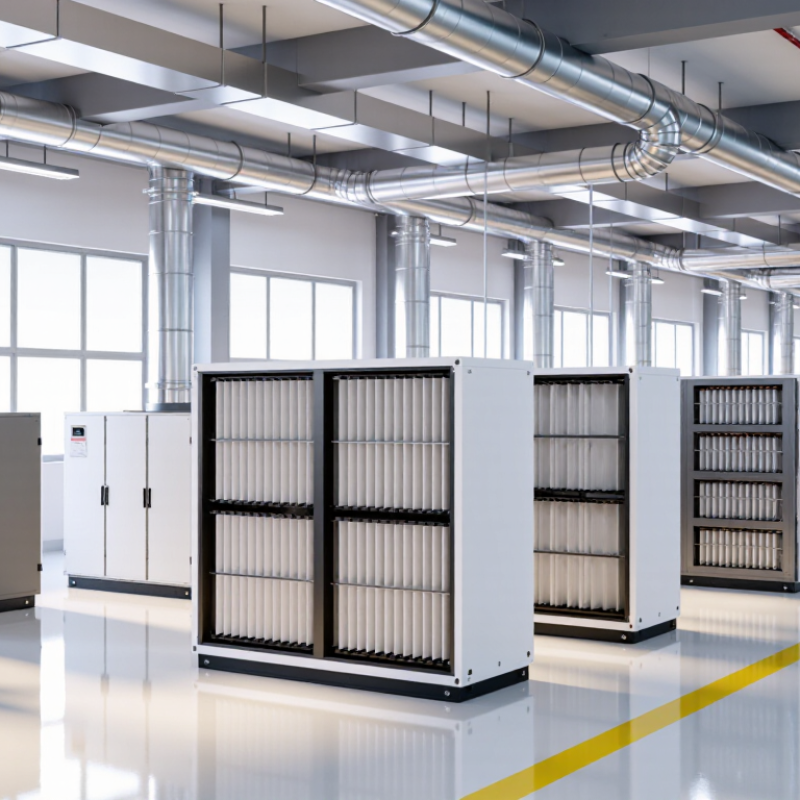
Top 10 Air Filter Manufacturers for Global Buyers

Air Filter Categories and Global Markets: HVAC, HEPA, and Industrial

Air filters serve different jobs, so global buyers should compare manufacturers by application, not catalog size. HVAC filters manage everyday dust and help protect coils, fans, and indoor air systems. Common choices include panel, pleated, and bag filters, with performance depending on particle capture, airflow resistance, and service life. Fit matters. A filter that restricts airflow can increase system load, even when its rating looks impressive.

HEPA filters are designed for high-efficiency particle removal in settings such as healthcare, laboratories, and clean production areas. Buyers should verify test standards, sealing methods, and performance across the complete filter assembly. Industrial filtration is broader. Dust collectors, paint booths, and process lines may need different media for heat, moisture, or chemical exposure. Not always. A high-efficiency option is not automatically the right option if it shortens maintenance intervals or disrupts airflow.

For a top-ten manufacturer comparison, request current test data, dimensional tolerances, and clear replacement guidance. Check whether products match local equipment and operating conditions; standards and procurement requirements can vary by market. Ask about batch consistency and technical support, too. A polished specification sheet cannot show how a filter performs after months of real use. That uncertainty deserves attention. Reliable suppliers explain limits, not just headline efficiency figures.

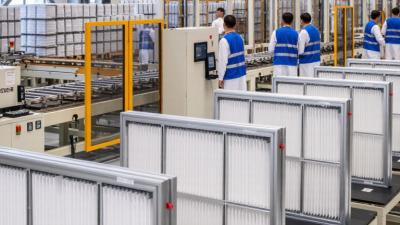
MERV 13 Performance: At Least 50% Capture of 0.3–1 µm Particles

Top 10 Air Filter Manufacturers for Global Buyers

MERV 13 Performance: At Least 50% Capture of 0.3–1 µm Particles

For global buyers, MERV 13 is a useful benchmark for fine-particle filtration. Under ASHRAE Standard 52.2, MERV 13 filters must achieve at least 50% efficiency for particles from 0.3 to 1.0 micrometers. The rating comes from laboratory testing across defined particle-size ranges. That matters. It is not a guarantee of identical performance in every building.

Real results also depend on airflow, filter fit, and system condition. A poorly sealed filter can let air bypass the media. Higher filtration may also increase resistance, so check the product’s pressure-drop data at the intended airflow. The U.S. Environmental Protection Agency advises using MERV 13, or the highest-rated filter the HVAC system can accommodate. A paper rating alone is not enough; procurement teams should request test documentation and confirm dimensions before ordering. Specifications can still leave practical questions unanswered.

Tips: Ask for the ASHRAE 52.2 test report, initial pressure drop, and recommended replacement interval. Compare results at the same airflow. Check fit at the filter rack, not just on the purchase sheet. A small gap can matter. Also, don’t assume every MERV 13 product behaves the same; media design and operating conditions vary.

Top 10 Global Air Filter Manufacturers by Product Range and Market Focus

A credible top-ten comparison should rank manufacturers by range and market fit, not by one headline specification. MarketsandMarkets’ Air Filter Market report estimates growth from US$14.3 billion in 2023 to US$19.3 billion by 2028. That expansion spans HVAC panels, pleated filters, bag filters, HEPA and ULPA media, activated-carbon units, and cleanroom systems. Not every range is deep. Some suppliers concentrate on commercial buildings; others serve factories, vehicles, turbines, or controlled production rooms.

WHO’s 2022 air-quality guidelines report that 99% of the global population lived in areas exceeding guideline limits in 2019. This is a public-health indicator, not a direct measure of filter sales, but it highlights varied filtration needs. Buyers should check rated airflow, pressure drop, particle-removal performance, replacement availability, and test documentation. A cleanroom filter may excel in particle control yet be uneconomical for a large office network. The ranking can also be imperfect: published product ranges do not always reveal local service capacity or real-world energy costs. Compare each manufacturer’s stated market focus against the installation conditions, not just the catalogue.

Top 10 Air Filter Manufacturers for Global Buyers - Top 10 Global Air Filter Manufacturers by Product Range and Market Focus

A non-ranked overview of ten common product and market-focus segments in the global air-filtration industry. Company names and brands are intentionally omitted; the rows describe product categories, not individual manufacturers.

No. Product and portfolio segment Typical product range Relevant classification or standard Typical market focus Common buyer considerations
1 General HVAC filtration Panel, pleated, and box-style filters for air-handling units and building ventilation systems. ISO 16890 is commonly used to classify general ventilation air filters by particulate removal performance. Commercial buildings, public facilities, offices, and institutional HVAC systems. Filter dimensions, pressure drop, dust-holding capacity, replacement frequency, and compatibility with the existing filter frame.
2 Bag and pocket filters Multi-pocket filters in synthetic or glass-fibre media, available in different depths and efficiency levels. Often classified under ISO 16890 for general ventilation applications. Air-handling units in commercial buildings, hospitals, industrial facilities, and larger ventilation systems. Airflow capacity, pocket stability, media type, pressure drop, and available installation depth.
3 High-efficiency particulate filtration HEPA and, in some product ranges, ULPA filters in panels, boxes, or terminal housings. EN 1822 and ISO 29463 provide test and classification frameworks for EPA, HEPA, and ULPA filters. Cleanrooms, pharmaceutical production, healthcare, laboratories, and other controlled environments. Efficiency class, leak-test requirements, seal design, airflow, and documented installation and testing procedures.
4 Cleanroom and terminal filtration systems High-efficiency filters supplied for terminal housings, fan-filter units, and cleanroom ceiling systems. High-efficiency filter classification is commonly based on EN 1822 or ISO 29463; room cleanliness is specified separately. Semiconductor, pharmaceutical, biotechnology, medical-device, and precision manufacturing facilities. Filter integrity testing, airflow uniformity, housing compatibility, installation access, and commissioning documentation.
5 Automotive cabin air filtration Cabin filters designed to capture particles; some versions also include activated carbon for certain gaseous contaminants and odours. Product performance depends on the test method and vehicle-specific requirements; buyers should compare stated test conditions. Passenger vehicles, commercial vehicles, replacement-parts distribution, and vehicle assembly. Vehicle fitment, particle capture claims, carbon-layer specifications, airflow resistance, and replacement availability.
6 Engine intake and heavy-duty air filtration Engine air-cleaner elements, safety elements, and intake filtration components for on-road and off-road equipment. Performance is assessed using application-specific test procedures; specifications vary by engine and equipment design. Trucks, buses, construction machinery, agricultural equipment, power generation, and other heavy-duty applications. Dust-holding capacity, sealing reliability, service interval, operating environment, and correct equipment fit.
7 Industrial process and dust collection Cartridge filters, baghouse filter bags, pleated elements, and replacement media for dust collectors. Selection is generally application-specific; particle characteristics, operating conditions, and collector design affect performance. Metalworking, woodworking, cement, minerals processing, food production, and other industrial operations. Dust type, temperature, humidity, chemical compatibility, cleaning method, emissions requirements, and filter life.
8 Gas-phase and molecular filtration Activated-carbon and other sorbent-based media, panels, cartridges, or modules for selected gases and odours. There is no single universal efficiency rating for all gaseous contaminants; performance should be checked for the target compound and test conditions. Commercial buildings, transport facilities, industrial processes, and applications requiring control of selected gaseous contaminants. Target contaminant, concentration, humidity, contact time, sorbent capacity, and safe replacement or disposal procedures.
9 Liquid and hydraulic filtration Liquid filter cartridges, bag filters, and hydraulic elements for fluid cleanliness and equipment protection. Filtration ratings and test methods vary by fluid and application; buyers should confirm the rating basis and operating conditions. Manufacturing, water treatment, process industries, mobile hydraulics, and equipment maintenance. Fluid compatibility, particle-size rating, flow rate, pressure rating, seal material, and element-change requirements.
10 Residential and portable-air-cleaner filters Replacement filters for residential ventilation, HVAC equipment, and portable air cleaners; products may combine particle media with sorbent layers. ASHRAE Standard 52.2 defines the MERV rating method for ventilation air-cleaning devices; ratings should be interpreted for the intended system. Homes, small offices, schools, and consumer air-cleaning applications. Appliance compatibility, airflow, filter dimensions, replacement cost, and substantiation of performance claims.

Note: ISO 16890, EN 1822, ISO 29463, and ASHRAE Standard 52.2 address different filter types or rating approaches and are not directly interchangeable. Confirm the applicable test method, operating conditions, and local requirements before comparing products.

EN 1822 H13 Benchmark: At Least 99.95% Efficiency at MPPS

For global buyers, an H13 label should mean more than a specification-sheet claim. Under EN 1822, an H13 filter must achieve at least 99.95% integral efficiency at its most penetrating particle size, or MPPS. The MPPS varies with filter media and airflow, so testing uses defined procedures rather than a convenient, fixed particle size. A high percentage matters. So does the test behind it.

Ask for a test report that identifies the filter, airflow, MPPS, and measured efficiency. Individual filters may also undergo leak testing, since a small defect or damaged seal can undermine performance in service. Check the pressure drop at the intended operating airflow, too. A filter that meets the efficiency benchmark but restricts airflow excessively may not suit the system. The details matter.

Installation deserves equal attention. Inspect the frame, gasket, and housing for gaps, then confirm the filter is seated evenly. Even a certified product cannot compensate for bypass around its edges. This is where buyers should pause. Documentation can look reassuring, but it does not replace checking the installed unit. And test conditions may differ from actual use; that gap deserves honest discussion with the supplier.

Global Buyer Checklist: Pressure Drop, Filter Life, Testing, and Compliance

Top 10 Air Filter Manufacturers for Global Buyers

A filter’s efficiency rating matters, but so does the resistance it adds to airflow. Ask suppliers for pressure-drop data at your actual operating airflow, not just a catalogue value. A few pascals can matter in a system running continuously. Check both clean-filter and final-resistance figures, then confirm the fan can handle the added load. ASHRAE Standard 52.2 classifies filters by particle-size efficiency; its MERV 13 category requires at least 50% efficiency for 0.3–1.0 μm particles and 85% for 1–3 μm particles. These are minimum test thresholds, not guarantees of performance in every installation.

Filter life needs equal scrutiny. There is no universal service interval implied by a MERV rating. Request the test airflow, dust-loading method, capacity, and terminal pressure drop behind any lifespan claim. Compare like with like. A filter that lasts longer on paper may simply have been tested under different conditions. Real buildings are messier.

For global purchasing, ask for reports referencing ASHRAE 52.2 or ISO 16890, and verify the tested model matches the quoted dimensions and construction. ISO 16890 classifies performance by ePM1, ePM2.5, and ePM10 particle fractions. Request accredited laboratory documentation where available, plus batch traceability and material declarations for the destination market. Read the fine print. A rating without a complete test basis is hard to compare, and buyers sometimes overlook this.

Top 10 Air Filter Manufacturers for Global Buyers

Global Buyer Checklist: Pressure Drop, Filter Life, Testing, and Compliance

This standards-based benchmark shows minimum filtration efficiencies for MERV 13–16 under ASHRAE Standard 52.2; it is not a ranking of manufacturers. When comparing suppliers, also request test reports and confirm initial and final pressure drop, stated service life, and applicable market compliance. Pressure drop and filter life depend on the specific filter and operating conditions.