Leave Your Message
Products Categories
Featured Products

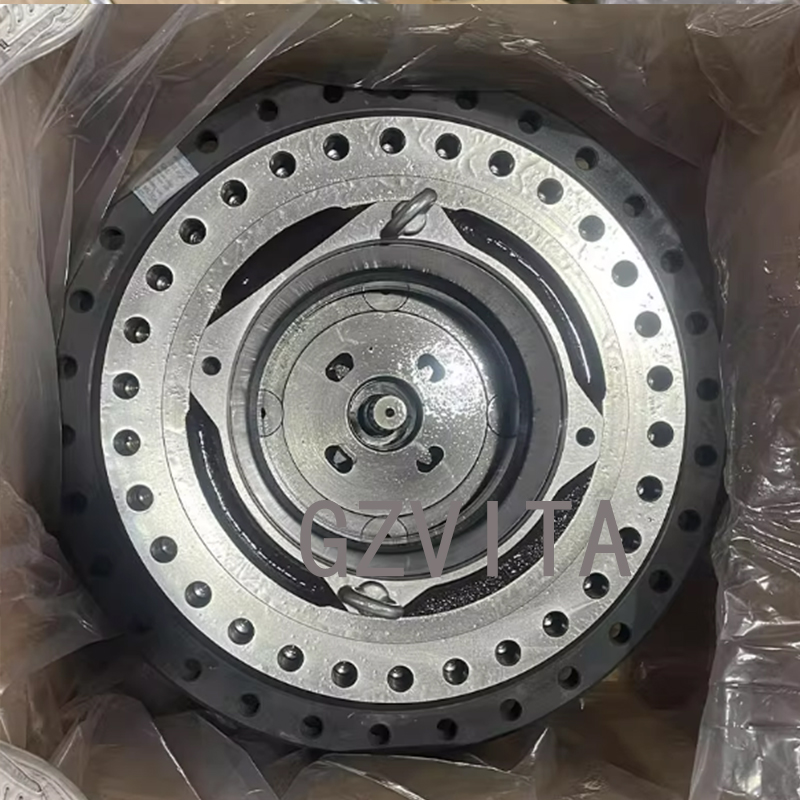
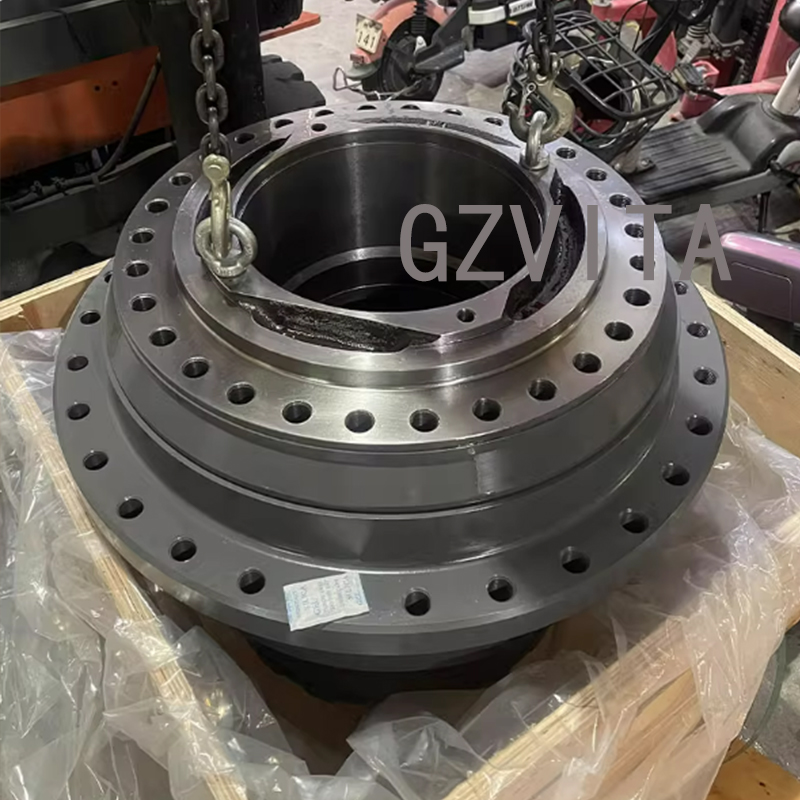
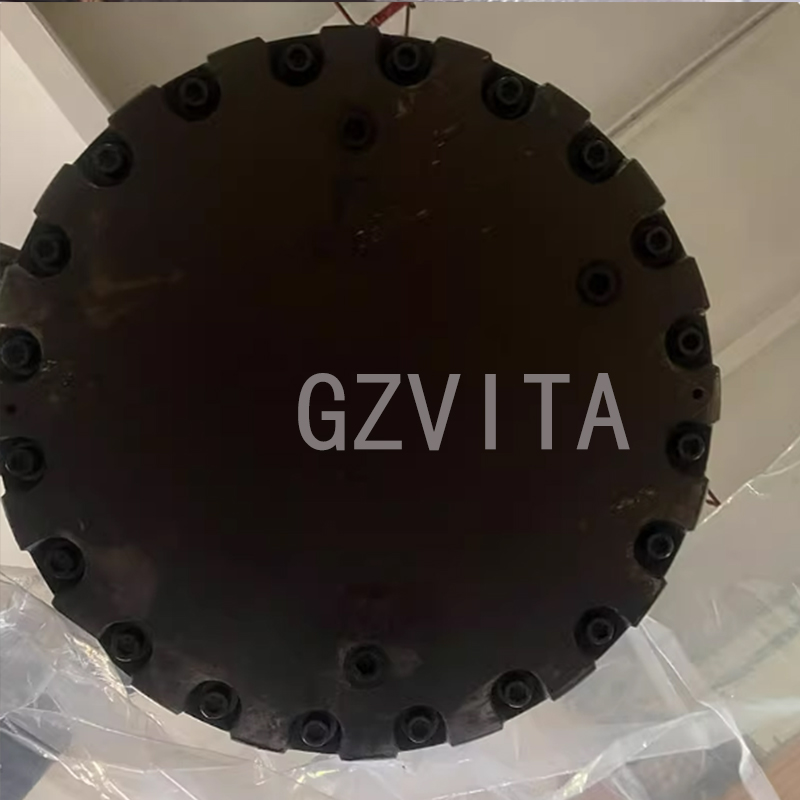
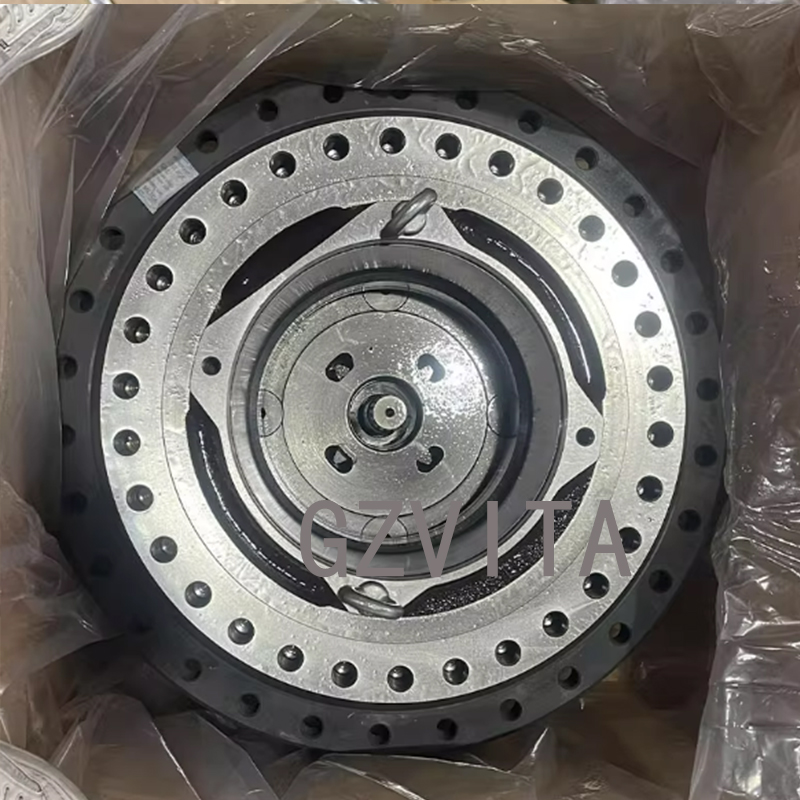
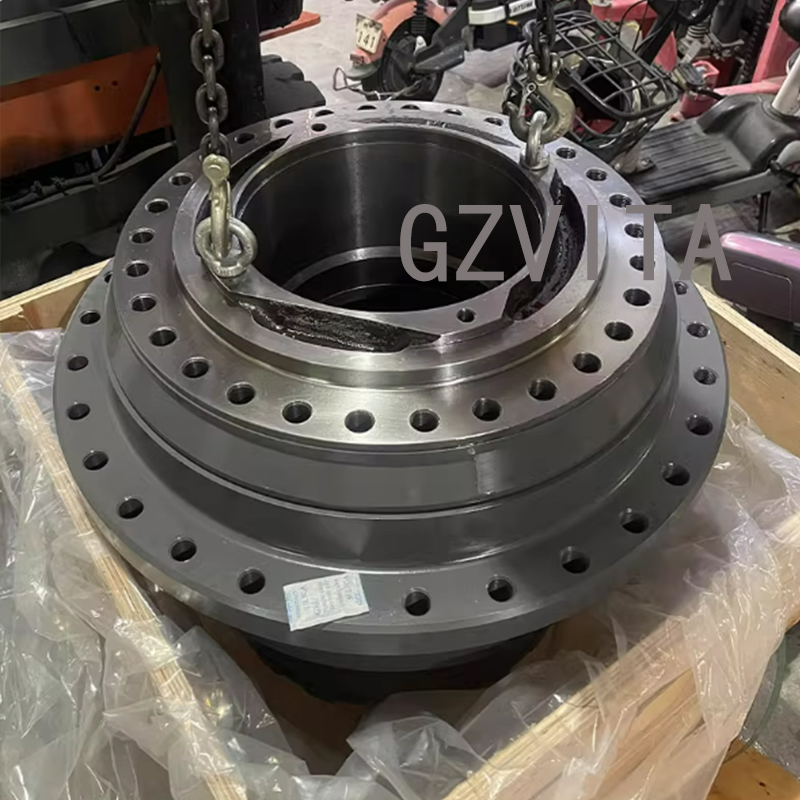
XE900D 950DA Travel Gearbox Assembly for XCMG900Excavator Final Drive Reduction Gear Box Travel reduction Dearbox RX220R94 800380418

Torque multiplication​ – Significantly increases output torque from the travel motor.

Speed reduction​ – Converts high motor RPM into low-speed, high-torque sprocket rotation.

Final drive unit​ – The last reduction stage in the travel power train.

Sprocket drive​ – Directly engages and drives the track chain via the output sprocket.

Planetary gear sets​ – Uses compact, multi-stage planetary gears for high reduction ratios.

Load distribution​ – Evenly distributes massive track forces across multiple gears.

Axle function​ – Acts as the primary axle, supporting the machine's weight on the track frame.

Radial load support​ – Bearings support the weight of the machine through the tracks.

Axial load support​ – Withstands forces from turning and side slopes.

Impact absorption​ – Cushions shocks from uneven ground and obstacles.

Power transmission​ – Transmits hydraulic motor power to the track with minimal loss.

Compact design​ – Houses complex gearing in a space-saving package within the track frame.

High mechanical advantage​ – Enables a small motor to move a heavy machine.

Track tension maintenance​ – Provides a solid, fixed drive point for proper track tension.

Bogie wheel alignment​ – Helps maintain the track frame and roller alignment.

Sealed lubrication system​ – Contains oil for permanent gear and bearing lubrication.

Heat dissipation​ – Metal housing transfers gear friction heat to the environment.

Contaminant exclusion​ – Seals keep dirt, water, and debris out of the gear train.

Braking surface​ – Often provides the rotating surface for the travel parking brake.

Mounting platform​ – Serves as the mounting point for the travel motor and track frame.

Torque reaction handling​ – Anchors the motor's reaction torque to the track frame.

Swing bearing clearance​ – Maintains proper clearance for the upper structure swing bearing.

Ground clearance determination​ – Its vertical position affects the machine's overall ground clearance.

Track alignment​ – Ensures the sprocket correctly aligns with the track chain and rollers.

Noise reduction​ – Precision gearing reduces operational noise from the drive system.

Vibration dampening​ – Reduces vibration transmitted from the tracks to the main frame.

Efficiency optimization​ – High-quality gearing ensures efficient power transfer.

Service life extension​ – Protects the high-speed, lower-torque travel motor from direct load.

Traction control​ – Fundamental component in delivering usable tractive effort to the ground.

Gradability enablement​ – Provides the necessary torque to climb steep slopes.

Counter-rotation capability​ – Allows independent track control for zero-radius turns.

Immobilization function​ – When locked via its brake, it securely holds the machine in place.

Speed matching​ – Ensures both left and right tracks receive appropriately reduced speed for straight travel.

Bearing preload maintenance​ – Maintains proper bearing preload for long component life.

Lubrication supply​ – Oil reservoir lubricates gears and bearings continuously.

Debris shedding​ – Housing design helps shed mud and rocks to prevent packing.

Structural integrity​ – Adds rigidity and strength to the track side frame.

Weight distribution​ – Contributes to the machine's lower weight distribution for stability.

Protective function​ – Shields internal gears and the motor shaft from external damage.

    Is it easy to find the correct hydraulic pump through the pump number ?

    Finding the correct hydraulic pump using the pump number can be relatively straightforward, but it depends on several factors:


    Manufacturer’s Database: Most hydraulic pump manufacturers maintain a comprehensive database of their products, including specifications, part numbers, and compatible models. If you have the pump number, you can often look it up in the manufacturer’s catalog or website to find the exact match.


    Pump Number Format: The ease of finding the correct pump also depends on the format and completeness of the pump number. Some manufacturers use standardized numbering systems that make it easier to identify specific models, while others may have more complex or less intuitive numbering.


    Cross-Referencing: Many suppliers and distributors provide cross-reference tools that allow you to input a pump number and find equivalent or compatible pumps from different manufacturers. This can be particularly useful if the original manufacturer is no longer in business or if you’re looking for alternatives.


    Technical Support: If you’re having difficulty identifying the correct hydraulic pump, reaching out to the manufacturer’s customer support or a knowledgeable distributor can be helpful. They can assist you in interpreting the pump number and finding the right replacement.

    Documentation:

    Having access to the original equipment documentation, such as service manuals or parts lists, can also aid in identifying the correct hydraulic pump.


    These documents often include part numbers and specifications that can help you confirm the right pump.

    Condition of the Pump Number:

    If the pump number is worn or damaged, it may be challenging to read or interpret.


    In such cases, additional information about the pump, such as its physical characteristics or application, may be necessary to identify it accurately.

    In summary,

     While it is generally easy to find the correct hydraulic pump through the pump number, the process can vary based on the manufacturer, the clarity of the pump number, and the availability of resources for cross-referencing.

    Having the right information and access to manufacturer support can significantly simplify the process.

    Leave Your Message