Leave Your Message

2026 Top Frame Support Bracket Types for Global Buyers

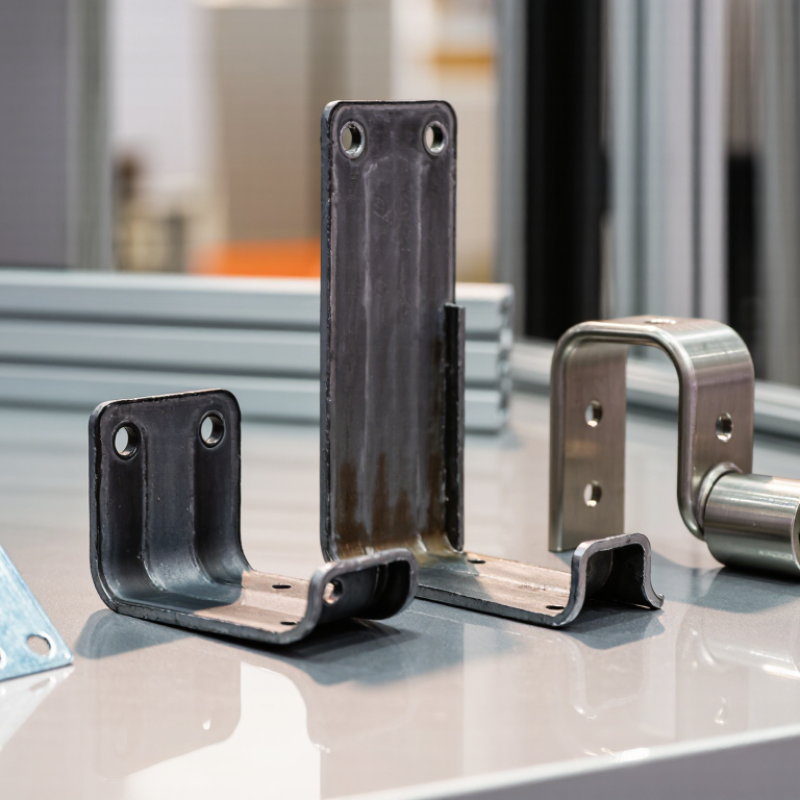
Choosing the right Frame Support Bracket in 2026 will require more than comparing price lists. Global buyers must match bracket geometry, load direction, material, coating, and installation conditions. A compact galvanized angle bracket may suit a light equipment frame. A welded steel support may be necessary for vibration, wind, or repeated mechanical loads.

Market conditions support this wider evaluation. The International Energy Agency’s Renewables 2024 report forecasts more than 5,500 gigawatts of new renewable capacity from 2024 to 2030. This expansion increases demand for durable brackets used in solar structures, battery systems, cable routes, and supporting frames. The UNEP and GlobalABC Buildings and Construction Global Status Report also identifies buildings as major users of global energy and contributors to emissions. Consequently, buyers are examining lighter designs, longer service life, and recyclable materials.

Performance matters most.

This guide reviews the leading Frame Support Bracket types expected to attract global purchasing attention in 2026. It considers angle brackets, U-brackets, clevis brackets, adjustable supports, welded assemblies, and corrosion-resistant stainless-steel options. The discussion also connects product selection with practical standards, including ISO 898-1 fastener requirements, ASTM material practices, and EN 1090 considerations for fabricated steel components. These references do not replace project-specific engineering approval.

There is no universal bracket winner. A cheaper part can become expensive after field modification, coating failure, or delayed installation. Buyers should request verified load data, dimensional drawings, traceability documents, and testing evidence. Some suppliers still present incomplete information. That weakness deserves attention. Reliable decisions come from comparing tested performance with the actual site environment, not from trusting a catalogue photograph alone.
2026 Top Frame Support Bracket Types for Global Buyers

Frame Support Brackets: Definition, Functions, and Main Applications

A frame support bracket is a shaped component that connects, reinforces, or positions two structural members. It may support a chassis rail, equipment frame, enclosure, seat base, or pipe assembly. Common forms include angle brackets, U-brackets, gusseted plates, channel supports, and vibration-isolated mounts.

Its main functions are load transfer, alignment, stiffness, and vibration control. A well-designed bracket spreads force across a wider area, reducing local stress around bolt holes. Engineers usually review material thickness, bend radius, weld length, fastener grade, corrosion exposure, and fatigue cycles.

Real assemblies are messier. A bracket can pass a static load test yet fail after repeated vibration. Drainage and tool access also matter during installation.

Applications are expanding with vehicle electrification, industrial automation, and modular construction. The International Energy Agency reported nearly 14 million electric car sales worldwide in 2023, increasing demand for compact, lightweight structural supports around battery systems. The World Steel Association recorded approximately 1.89 billion tonnes of crude steel production in 2023, showing the continuing scale of steel-based manufacturing. Aluminum and reinforced polymers may reduce weight, but they require different joining and corrosion strategies. That rule is useful, but incomplete.

Global buyers should request drawings, load cases, surface-treatment details, dimensional tolerances, and test records.

Practical inspection should include hole position, flatness, coating thickness, and weld consistency. A lower unit price can become expensive when rework, galvanic corrosion, or poor fit appears later. Standardized designs help, but application-specific validation remains essential.
Key Types of Frame Support Brackets and Their Structural Features

2026 Top Frame Support Bracket Types for Global Buyers

Frame support brackets transfer loads between structural members, so their geometry matters more than appearance. Flat mounting plates suit light, direct connections with limited directional forces. L-shaped brackets add a perpendicular flange, improving resistance against twisting. Their bent profile also saves installation space.

U-channel brackets support rails, tubes, and rectangular frames from two sides. They spread pressure across wider contact areas. Gusseted brackets add triangular reinforcement at high-stress corners. This feature reduces bending, especially when equipment creates vibration or uneven loading. Slotted brackets provide adjustment during assembly, but excessive slot clearance can weaken joint stability. That detail is easy to overlook.

Material choice changes bracket performance. Mild steel offers practical strength and easy fabrication. Stainless steel performs better in damp or corrosive locations. Aluminum reduces weight, although it may require thicker sections for similar stiffness. Inspectors should check flange thickness, hole spacing, weld quality, and visible distortion. A clean coating cannot compensate for poor load alignment. Real projects also expose imperfect assumptions. A bracket may fit the drawing yet fail because nearby surfaces are not level. Global buyers should confirm dimensions, load direction, fastener compatibility, and local compliance requirements before production. Sample fitting remains useful, especially when frames come from different suppliers.

Material and Manufacturing Options for Frame Support Brackets

2026 Top Frame Support Bracket Types for Global Buyers

Material choice shapes a frame support bracket’s strength, weight, cost, and service life. Carbon steel remains practical for heavy structural loads and welded assemblies. The World Steel Association reported global crude steel production at about 1.89 billion tonnes in 2023. That scale supports broad availability and stable sourcing options. Stainless steel suits humid, chemical, or outdoor environments, but its higher price needs justification.

Aluminum offers lower weight and useful corrosion resistance. The International Aluminium Institute reported global primary aluminum production of about 70.6 million tonnes in 2023. Die-cast aluminum works well for repeated shapes and moderate loads. Stamped steel supports high-volume production with consistent dimensions. CNC machining can improve prototype accuracy, although it may waste more material. Powder coating adds surface protection, yet poor pretreatment can cause early peeling. No material wins every project. A bracket that looks overbuilt may still fail at its hole edges.

Tips: Specify load direction, vibration, temperature, coating, and fastener grade before requesting quotes. Ask suppliers for material certificates, dimensional inspection records, and salt-spray results when corrosion matters. ISO 9001-based quality systems can improve process control, but certification alone does not prove bracket performance. Request a first-article inspection. Check weld penetration, bend radii, burrs, and hole alignment. Small defects matter. Global buyers should also compare tooling ownership, minimum order quantities, packaging, and replacement lead times. My practical concern is simple: designs often focus on tensile strength while ignoring fatigue, assembly access, and real installation errors.

How to Select Frame Support Brackets for Different Global Projects

2026 Top Frame Support Bracket Types for Global Buyers

How to Select Frame Support Brackets for Different Global Projects

Selecting a frame support bracket starts with the project load, not the catalog image. For light enclosures, compact angle brackets may be sufficient. Heavy equipment frames need reinforced gussets or channel supports. Check vertical load, vibration, impact, and the bracket’s safety margin. A quiet warehouse differs from a vibrating pump room. Measure twice.

Material choice should match the environment. Zinc-coated steel suits many indoor and sheltered applications. Stainless steel performs better near salt spray, washdown areas, or persistent humidity. Aluminum reduces weight, but its lower stiffness may require thicker sections. Inspect hole spacing, mating surfaces, and fastener access before ordering. Small mismatches create expensive delays.

For international projects, request dimensioned drawings, load data, surface-finish details, and traceable inspection records. Confirm metric or imperial dimensions early. Also check whether installers can reach every bolt with ordinary tools. Factory samples and a trial fit can expose deflection, sharp edges, or awkward assembly. No bracket is perfect. Strong designs can still fail when drainage is ignored. Recheck assumptions when the site changes. A bracket chosen for a dry factory may need added corrosion protection at a coastal installation. Leave room for adjustment, but do not use adjustment to hide poor measurements.

2026 Top Frame Support Bracket Types for Global Buyers - How to Select Frame Support Brackets for Different Global Projects
Bracket Type Typical Structural Form Common Material Options Indicative Static Load Range* Recommended Project Applications Environmental Suitability Key Selection Factors Main Advantages Important Limitations
L-Shaped Angle Support Bracket Perpendicular horizontal and vertical legs with pre-punched or slotted holes Carbon steel, stainless steel, or aluminum alloy Approx. 0.5–3.0 kN Light-duty equipment frames, shelving structures, small pipe supports, signage frames, and general fabrication Suitable for indoor use; galvanized or coated versions can be used in moderate outdoor conditions Leg length, steel thickness, hole pattern, bolt grade, edge distance, and connection to the supporting frame Simple geometry, economical production, easy installation, and broad availability Limited resistance to twisting and eccentric loads unless reinforced with gussets or additional fasteners
Gusseted Heavy-Duty Support Bracket L-shaped bracket strengthened by a triangular or folded gusset plate Hot-rolled or cold-formed carbon steel; stainless steel for corrosive areas Approx. 3–15 kN Industrial platforms, HVAC supports, machinery frames, cable-tray supports, and warehouse infrastructure Indoor, industrial, and outdoor service when protected by hot-dip galvanizing or a suitable coating system Gusset size, weld quality, plate thickness, anchor capacity, vibration, and combined shear and bending loads Higher stiffness and lower deflection than a plain angle bracket Heavier, less compact, and more difficult to install in confined spaces
U-Bolt Frame Support Bracket U-shaped bolt assembly securing round or rectangular members to a base plate or frame Zinc-plated carbon steel, stainless steel, or hot-dip galvanized steel Approx. 1–8 kN Pipe racks, conduit systems, tubular frames, vehicle equipment, and utility support assemblies Indoor and outdoor applications; stainless steel is preferred for coastal or chemically exposed locations Pipe or tube outside diameter, U-bolt diameter, clamp clearance, saddle plate size, vibration, and corrosion exposure Fast installation, adjustable clamping, and effective support for cylindrical members Over-tightening can deform thin-wall tubes; slip resistance must be checked for dynamic loads
Strut-Channel Support Bracket Formed channel section with spring nuts, channel nuts, or bolted accessories Pre-galvanized steel, hot-dip galvanized steel, stainless steel, or aluminum Approx. 1–10 kN Electrical cable trays, mechanical services, solar support subframes, suspended services, and modular construction Good for indoor and outdoor use when the channel finish matches the exposure category Channel depth, span, support spacing, load distribution, connection hardware, and seismic or vibration requirements Highly configurable, reusable, and efficient for multi-service installations Long spans may require intermediate supports; local crushing and connection slip must be evaluated
T-Slot Extrusion Connector Bracket Machined or die-cast connector joining modular aluminum extrusion profiles 6061-T6 or 6063-T5/T6 aluminum alloy, often with plated steel fasteners Approx. 0.3–4.0 kN Automation equipment, machine guards, laboratory frames, inspection stations, and lightweight enclosures Suitable for clean indoor environments; anodized aluminum improves surface durability in moderate conditions Profile series compatibility, slot size, fastener torque, joint direction, frame rigidity, and repeated assembly needs Lightweight, corrosion-resistant, adjustable, and suitable for rapid reconfiguration Lower stiffness and thread strength than many steel brackets; galvanic corrosion may occur with incompatible metals
Base Plate with Vertical Frame Support Flat or formed base plate welded or bolted to a vertical support member Carbon steel, stainless steel, or aluminum plate Approx. 2–20 kN Equipment skids, guardrails, partition frames, rack uprights, and floor-mounted structural assemblies Indoor, outdoor, and industrial environments when the plate and anchors are specified for the exposure Base plate thickness, anchor layout, concrete strength, overturning moment, weld size, and edge distance Good load transfer to floors or foundations and suitable for permanent installations Requires accurate base alignment and adequate substrate capacity; anchor failure can govern the design
Adjustable Pivot or Slotted Support Bracket Bracket with elongated slots, pivot holes, or sliding plates for positional adjustment Coated carbon steel, stainless steel, or anodized aluminum Approx. 0.5–6.0 kN Solar mounting frames, equipment alignment, conveyor supports, adjustable partitions, and retrofit projects Indoor and outdoor use when slot surfaces, fasteners, and coatings are protected from corrosion Adjustment range, friction or locking method, slot orientation, bolt preload, wind load, and movement control Compensates for installation tolerances and simplifies alignment on uneven or variable structures Slots reduce net section strength; secure locking is essential where vibration or cyclic loading is present
Seismic and Vibration-Resistant Frame Bracket Reinforced bracket or restraint assembly designed with positive mechanical locking Structural carbon steel, galvanized steel, or stainless steel Project-specific; commonly engineered above 5 kN Data centers, hospitals, industrial plants, transport infrastructure, and equipment in seismic regions Indoor and outdoor applications subject to vibration, impact, or seismic movement Design acceleration, dynamic amplification, anchor type, brace angle, fatigue, displacement limits, and applicable local code Improves restraint performance under dynamic and accidental loading conditions Must be engineered for the specific structure; static load ratings alone are not sufficient
Corrosion-Resistant Marine Support Bracket Welded, formed, or machined bracket with sealed or drainage-conscious geometry 316 stainless steel, duplex stainless steel, marine-grade aluminum, or suitably protected steel Approx. 0.5–12 kN Coastal facilities, offshore auxiliary structures, water-treatment equipment, port infrastructure, and external plant frames High-humidity, salt-laden, and splash-zone environments, subject to material and coating selection Chloride exposure, crevice risk, dissimilar-metal contact, drainage, weld treatment, and inspection access Improved corrosion resistance and longer service life in aggressive environments Higher material cost; stainless steel grades and aluminum must be selected carefully for chloride and galvanic conditions
*Indicative static load ranges are for preliminary comparison only. Actual capacity depends on bracket geometry, material grade, thickness, fasteners, welds, anchors, load direction, unsupported length, deflection limits, fatigue, corrosion allowance, and the applicable design code. Final selection should be verified by a qualified structural or mechanical engineer for the specific project.

Installation, Quality Standards, and Sourcing Considerations for Buyers

Selecting frame support brackets in 2026 requires more than comparing catalogue dimensions. Fixed brackets suit stable layouts, while adjustable types help correct small site deviations. Gusseted designs add stiffness where vibration or uneven loading is expected. Installation begins with a clean, level contact surface. Check hole spacing against the approved drawing before tightening anything. Use calibrated torque tools, suitable washers, and corrosion-compatible fasteners. Overtightening can distort thin frames. That mistake is common. After fitting, inspect alignment from two directions. A bracket may look secure while forcing the frame sideways. Leave designed drainage gaps open, especially in outdoor assemblies.

Quality evidence should be practical, not decorative. Ask for material certificates, dimensional inspection records, and documented load-test methods. ISO 9001 certification can indicate controlled processes, but it does not replace product inspection. Confirm steel or alloy grade, coating thickness, weld quality, and batch traceability. For demanding applications, request sample reports before approving full production. Photos help, but measured data is stronger. Acceptance criteria should be agreed before manufacturing starts.

Sourcing decisions should include packaging, replacement parts, minimum order quantities, and delivery protection. Compare total landed cost rather than unit price alone. A low-cost bracket may require extra shims, rework, or site drilling. Samples often reveal sharp edges, uneven coatings, or unclear markings. Even experienced buyers miss small details when schedules become tight. Build time for a pilot installation. It may feel inefficient, yet one trial can expose a design weakness before hundreds of brackets arrive. Supplier communication matters too. Clear drawings and inspection checkpoints reduce avoidable disagreement.